
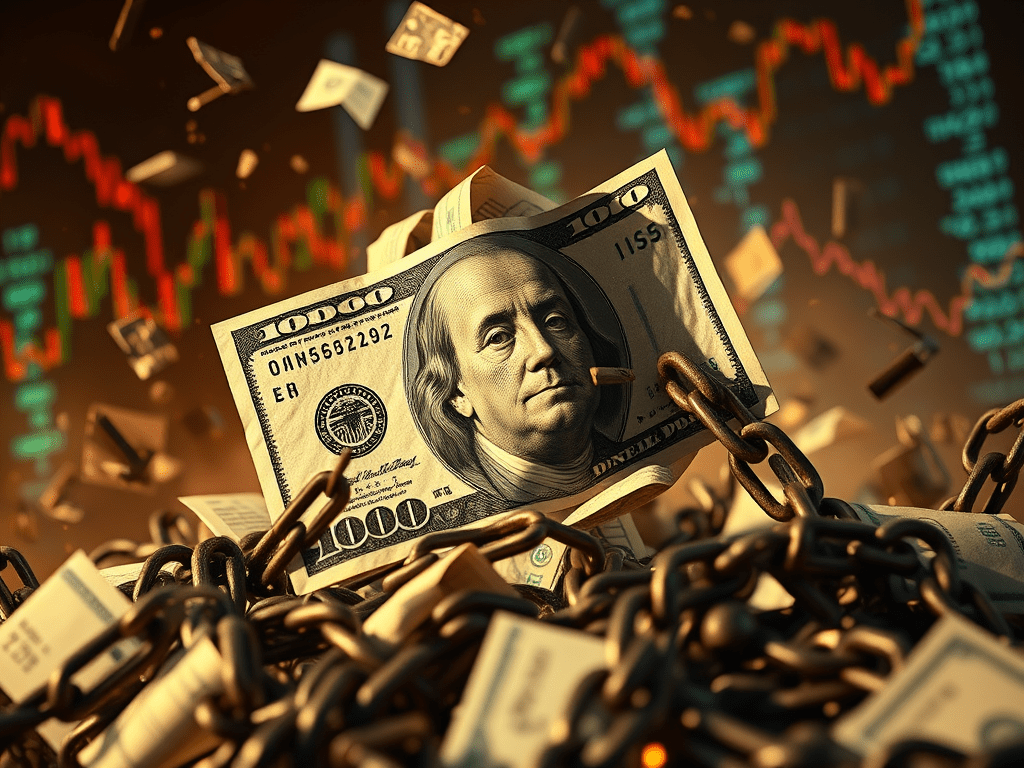
The economic policies shaping Donald Trump’s second term appear, from the standpoint of conventional economic theory, to be steering the United States toward self-inflicted harm. According to an analysis by Lazard’s Chief Market Strategist Ron Temple (as reported in Frankfurt on 16 September 2025), the introduction of broad tariffs averaging 15 to 20 percent is disrupting global supply chains, fueling inflation, and threatening to stall economic growth. Temple interprets these developments as signalling a potential end to the era of U.S. exceptionalism.
The Trump administration is not only applying tariffs to protect domestic industries, but also using them as a means to partly finance the generous tax cuts embedded in the “One Big Beautiful Bill Act” (OBBBA). Analysts working with Temple’s base scenario expect that such policies could push core inflation to around four percent while at the same time slowing the economy — a classic recipe for stagflation and a combination widely regarded as one of the most damaging macroeconomic environments.
Subscribe to get access
Read more of this content when you subscribe today.
The effects on the real economy could be severe. Rising prices for imported intermediate goods are placing pressure on manufacturers as well as consumers. There is a risk that higher costs will fuel wage demands, which could squeeze profit margins and discourage investment. Companies are also facing increasing uncertainty in price formation, which threatens their ability to plan for the long term.
Financial markets are beginning to reflect this turbulence. Temple anticipates heightened volatility and warns that U.S. equity valuations are increasingly decoupling from their fundamental indicators. In his view, the combination of rising interest rates, growing geopolitical risk and an assertive fiscal stance leaves little margin for error, making a shift of allocations toward international markets seem advisable.
Seen from Europe, this chain of developments looks almost irrational — as though the U.S. were deliberately dismantling the foundations of its own economic strength. Yet the very coherence of these moves raises an unsettling question: could there be a hidden strategic rationale behind them, or insights circulating within certain U.S. policy circles that have not yet been fully understood in Europe? What appears to be the decline of U.S. exceptionalism might, from that perspective, be intended as its reinvention.

















 ^^^ RATING EVIDENCE GmbH
Leave a comment