
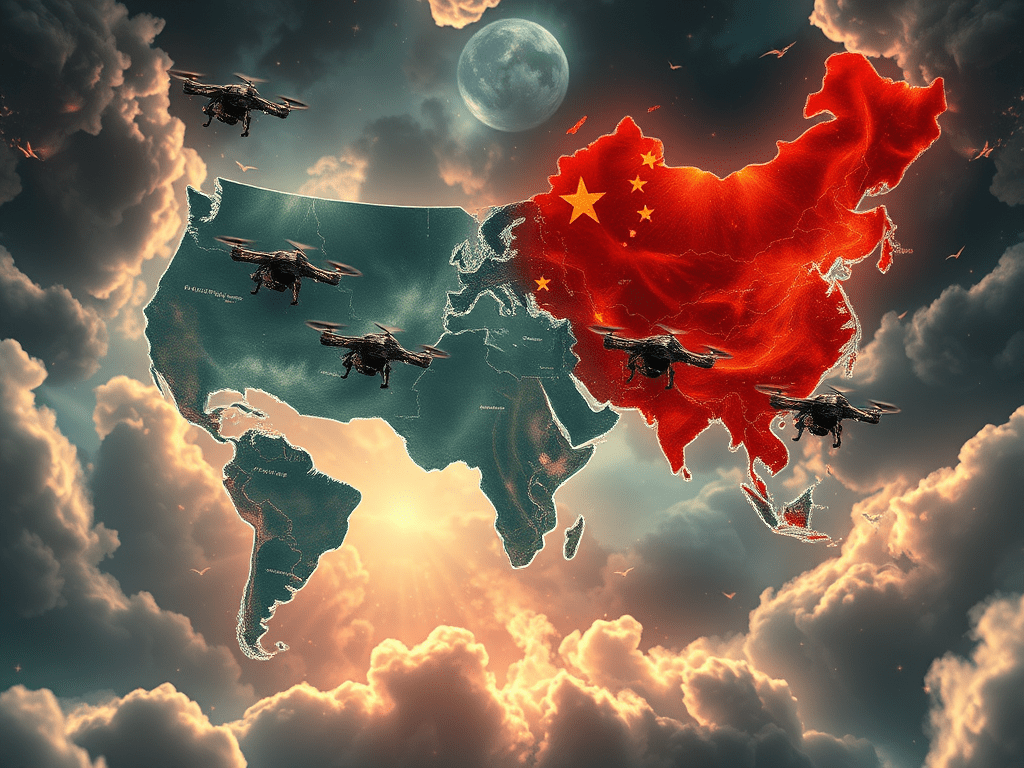
The global order is entering a period of profound transition. For nearly eight decades, Western security and economic stability rested on the foundation of U.S. global leadership. Today, however, that geopolitical structure is eroding. As the rating agency Egan-Jones notes, post-war stability relied on the assumption “that America would use its global hegemony to deter conflicts between great powers.”
This Pax Americana is no longer guaranteed — and the implications for Europe are tectonic.
A Shrinking American Security Umbrella
The United States’ evolving “America First” doctrine marks a decisive shift. Domestic pressures, growing strategic fatigue, and changing threat perceptions have led Washington to reconsider its global commitments. As Egan-Jones explains, the rationale for retrenchment includes:
1. “Extended conflicts are unpopular with the American electorate.”
2. “Extended conflicts have largely failed. Economic coercion has been more effective.”
3. “America lacks the asymmetric advantages that were critical to winning prior conflicts.”
This reflects a strategic pivot: the U.S. is becoming more selective in engaging abroad. For Europe, which has long relied on American military backing, this raises an uncomfortable question — what happens when Washington is no longer willing or able to be Europe’s ultimate guarantor?
China’s Rise and Europe’s Vulnerability
Europe now faces a world where power balances are shifting not only in its east, but across the Pacific. Egan-Jones highlights the scale of China’s military-industrial capabilities:
Subscribe to get access
Read more of this content when you subscribe today.
Europe — militarily under-resourced and industrially constrained — stands exposed. The continent’s security architecture was never built for a scenario where the U.S. simultaneously retrenches and China accelerates its technological edge.
Economic Power as Geopolitical Power
Just as critical is the economic dimension. The report underscores a fundamental truth of modern power politics:
“Remember, it’s all about the money.”
Europe’s vulnerabilities are clear:
• Dependence on U.S. defense guarantees
• Reliance on Chinese manufacturing and supply chains
• Slow growth and demographic headwinds
• Increasing competition in strategic technologies
Meanwhile, adversaries and competitors alike are strengthening economic resilience and industrial capacity as tools of geopolitical influence.
Europe’s Strategic Imperative
The lesson for Europe is stark. It must:
• Rapidly increase defense spending and coordination
• Rebuild industrial and technological competitiveness
• Diversify supply chains and energy sources
• Strengthen strategic autonomy — while preserving the transatlantic alliance
Adapting to this new era is not optional. As Egan-Jones cautions, “change is constant and with change comes opportunity and risk.” Europe stands at the edge of a new geopolitical reality — one where stability must be earned, not assumed.
















 ^^^ RATING EVIDENCE GmbH
Leave a comment