
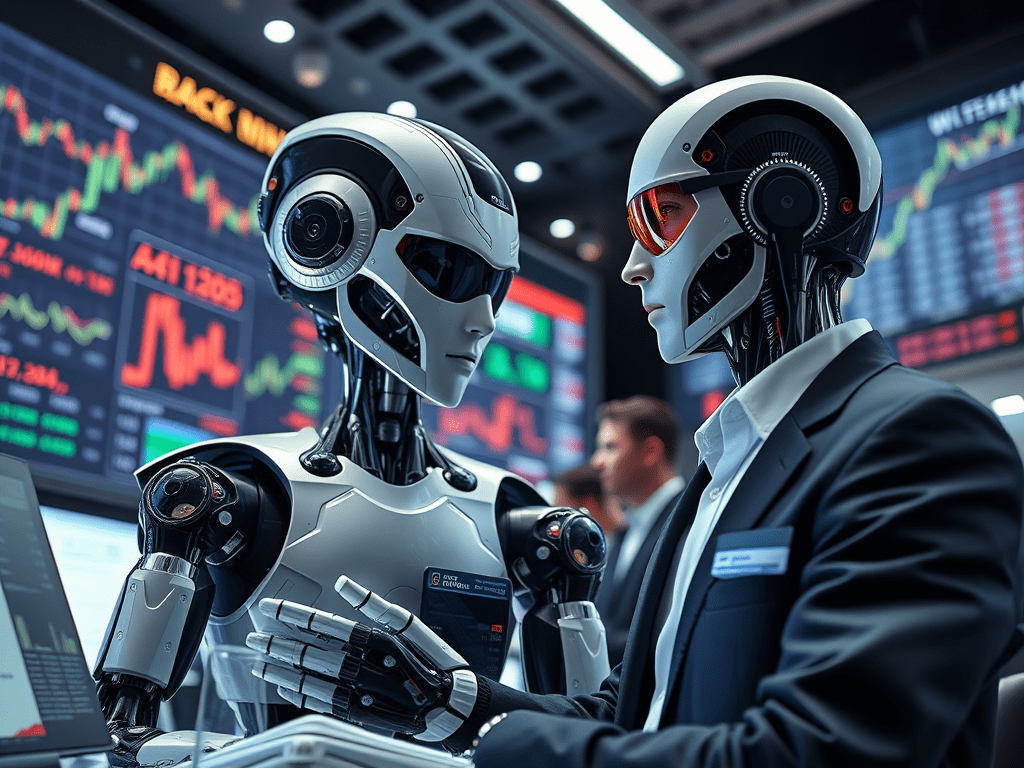
Global markets are entering the second half of the decade with a mix of resilience, concentration risks and growing signs of speculative excess, particularly in artificial intelligence and adjacent technologies. Recent venture capital data underline how strongly capital is being drawn toward AI, which now accounts for more than half of all VC investments this year. Within this universe, attention is rapidly shifting toward industrial humanoid robotics. According to CB Insights, humanoid robotics recorded 17 deals last quarter, more than any other single category, a development that reflects how “investors’ appetite for humanoid robots is largely driven by AI, because AI gives humanoids a commercial potential that was previously not possible.”
At the same time, this surge is reviving memories of past technology bubbles. Daiva Rakauskaitė, partner and manager at Aneli Capital, explicitly draws a parallel to the early 2000s, arguing that there are “strong similarities between today’s AI-driven investment boom and the dotcom bubble.” In her view, the risk is being underestimated, especially in humanoid robotics, where commercial viability remains unproven. “Many AI startups that can’t yet generate revenue will fail, but we’re reaching a consensus on that in the market. While the same risks persist in humanoid robotics, many investors tend to overlook this,” she says, stressing that industrial and logistics robots already generate revenue, “while humanoids can’t yet prove their commercial value.” Even policymakers are warning against excess, with China’s economic planning authorities calling on the sector to “balance the speed against the risks of bubbles.”
These micro-level developments are unfolding against a macroeconomic backdrop that is robust but increasingly uneven. As Dr. Johannes Mayr, Chief Economist at Eyb & Wallwitz, notes, the global economy remains resilient, yet growth is clearly K-shaped. In the United States, high-tech investment continues to support growth, while consumption and the labor market are under pressure. Europe benefits from favorable financing conditions and public investment, but the window for reforms is narrowing ahead of key elections. China, meanwhile, is gradually rebalancing toward consumption without abandoning its growth path. For investors, this means “seizing opportunities, diversifying risks – and keeping the K-shape of the economy and financial markets in mind,” Mayr argues.
Financial markets reflect the same tensions. Equity markets remain supported by earnings momentum, benign inflation dynamics and the prospect of further monetary easing, yet valuation concerns are mounting. Johanna Kyrklund, Group Chief Investment Officer at Schroders, warns that index concentration has become a central risk factor. She emphasizes that investors must manage exposure at the stock level through fundamental analysis rather than relying on index weights, noting that “there is a danger in passive strategies that investors are unknowingly concentrated in a small group of technology companies.” With heavy investments by hyperscalers in data centers and cloud infrastructure, comparisons with the dotcom era are resurfacing, particularly as “many AI start-ups are loss-making, with valuations inflated by vendor financing.”
Subscribe to get access
Read more of this content when you subscribe today.
The implication for investors is not to retreat from innovation-driven themes such as AI, automation or robotics, but to differentiate more sharply between commercially viable business models and speculative narratives. As markets head toward 2026, opportunities remain, but as Kyrklund cautions, “inaction will have its price.” In an environment shaped by uneven growth, technological disruption and narrowing political reform windows, navigating successfully will depend less on following the hype cycle and more on grounding investment decisions in economics, cash flows and long-term fundamentals.












 ^^^ RATING EVIDENCE GmbH
Leave a comment