
Author: Dr. Oliver Everling
-

Finland, Happiness, and Creditworthiness: How Societal Strength Translates into Strong Credit Ratings
In recent years, Finland has consistently ranked as the happiest country in the world, most recently reaffirmed by the World Happiness Report 2026. While happiness might seem like a purely social or cultural metric, it also has profound implications for economic performance and, ultimately, sovereign credit ratings. A closer look reveals that the same structural…
-

Moody’s Move to the Blockchain: A Turning Point for the Future of Credit Rating Agencies
The recent announcement by Moody’s Corporation marks a potentially transformative moment for the global credit rating industry. By launching its Token Integration Engine™ (TIE) and becoming “the first credit rating agency to ingest analytical data and share credit insights on-chain,” Moody’s is not merely adopting new technology—it is redefining how credit analysis can function in…
-

Spatial Computing, Open Web Architectures and Credit Ratings: Strategic Implications of WebSpatial for Apple and the Vision Pro
Spatial computing is increasingly viewed not merely as a product innovation cycle but as a structural shift in how digital value is created, distributed, and monetized. For large technology companies, positioning within this shift can influence long-term revenue resilience, ecosystem control, capital allocation priorities, and ultimately investor confidence. Because credit ratings reflect an agency’s assessment…
-

Moody’s Expansion into Saudi Arabia
The recent announcement by Moody’s Corporation that it will establish a regional headquarters in Riyadh signals a notable shift in the global financial ecosystem. The company explained that the new presence reflects “confidence in Saudi Arabia’s strong economic momentum” and demonstrates a commitment to supporting capital markets development in the Kingdom and broader Middle East.…
-

VR in Banking: From VR Group to Virtual Reality
The VR app developed by Universal Investment marks a bold step into a new dimension of financial communication. Available on the Meta Quest platform, it is widely regarded as the first application from the German banking sector to enter virtual reality in this form. Instead of presenting financial data through traditional charts or slides, the…
-

Why Credit Ratings Matter for Everyone: What Estonia’s Missing S&P Rating Means for Institutional Investors and Everyday Savers
Credit ratings are often perceived as technical tools for bond traders and institutional investors. In reality, they play a much broader role. They influence how governments finance themselves, how banks raise capital, and ultimately how safe ordinary savers feel when placing money in a fixed-term deposit or savings account abroad. The recent case of Estonia,…
-

Awards for the Best Asset Managers 2026: M.M.Warburg & CO Overall Winner at the firstfive Gala in Frankfurt
At the very festive firstfive Gala in the Villa Bonn in Frankfurt am Main, the best asset managers of the year 2026 were honored in front of an exclusive audience. Accompanied by first-class chamber music performed by violinist David Baban with piano accompaniment by Jiyun Kim, who played works by Grażyna Bacewicz, Johannes Brahms, Claude…
-

Qualcomm’s Credit Ratings: A Strong Investment-Grade Profile in a Competitive Sector
Qualcomm Inc., the U.S.-based semiconductor and wireless technology leader, holds a solid investment-grade credit profile supported by strong fundamentals and prudent financial management. Across major credit rating agencies, Qualcomm’s ability to meet financial commitments and sustain access to capital markets is viewed favorably – a critical advantage in a cyclical and capital-intensive industry. Investment-Grade Ratings from S&P…
-

Roblox’s Credit Risk Trajectory: From Market Stress to Stabilization
Roblox Corporation has experienced a pronounced shift in its credit risk profile over recent years, reflecting both sector-wide volatility and company-specific improvements. According to the credit risk assessment prepared by martini.ai, Roblox operates “as a leading online platform enabling users to create and engage in immersive 3D experiences,” while simultaneously pursuing a growth strategy that requires…
-

Implications of Weak German Business Sentiment for Credit Ratings
This article is an independent commentary on macroeconomic research published by NORD/LB. It is based on a Macro Research News Flash authored by Christian Lips, Chief Economist at NORD/LB, following the release of the January results of the German ifo Institute’s monthly business climate survey. The commentary builds on NORD/LB’s published assessment and discusses the potential implications for credit ratings. Macroeconomic…
-

Siemens AG: Strong Credit Fundamentals Underpin Market Confidence
As the 2025 reporting season gathers momentum, investors and credit analysts are once again confronted with a flood of new numbers, guidance updates, and strategic narratives. In such phases, it is particularly valuable to take a step back and assess what the existing body of information already tells us about a company’s underlying risk profile. Before focusing…
-

Positive Market Start and Its Implications for Credit Ratings
Equity markets have started the year on a positive trajectory, a development that has important implications for credit ratings and the perception of default risk across sectors. According to Timo Steinbusch, Head of Portfolio Management at apoBank, “the first trading days are constructive and show a fundamentally positive market sentiment.” This sentiment helps mitigate near‑term…
-

Scope Ratings: Sharp Market Share Losses Cast a Shadow over Growth Ambitions
Scope Ratings has intensified its public narrative around expansion, positioning itself as a European counterweight to the dominance of S&P, Moody’s and Fitch. Yet the latest market share data published by the European Securities and Markets Authority (ESMA) reveal a starkly contrasting reality: Scope’s relative position in the European rating market has weakened significantly over…
-

Shifting Market Shares in the European Credit Rating Industry
The European credit rating agency (CRA) market remains highly concentrated, butrecent data from the European Securities and Markets Authority (ESMA) indicate subtle yet meaningful shifts in market shares that are reshaping competitive dynamics. The 2025 edition of ESMA’s CRA Market Share Report, based on audited 2024 revenues, provides a detailed snapshot of how dominance, consolidation,…
-

Bremen Prosecutors File Charges in Greensill Case
In a press release dated December 17, 2025, the Bremen public prosecutor announced that it has brought charges before the Regional Court of Bremen against “two former members of the Management Board and one member of the Supervisory Board of Greensill Bank AG.” The charges relate to suspected bankruptcy offenses in an especially serious case,…
-

US AI-Driven Investment Intelligence Raises the Stakes for European Rating Agencies
The launch of Morningstar and PitchBook applications within ChatGPT marks a significant escalation in the global competition for investment intelligence. By integrating proprietary financial data directly into AI-driven workflows, the US-based firms are redefining how investors access, analyze, and act on market information—and in doing so, they are widening the gap European rating agencies must…
-

AI, Robotics and K-Shaped Growth: Navigating Innovation, Valuations and Bubble Risks in Global Markets
Global markets are entering the second half of the decade with a mix of resilience, concentration risks and growing signs of speculative excess, particularly in artificial intelligence and adjacent technologies. Recent venture capital data underline how strongly capital is being drawn toward AI, which now accounts for more than half of all VC investments this…
-

Soft Skill Rating: From Idea to Publication in Record Time
What only began as a bold initiative in March 2025 is now approaching its first milestone: the imminent publication of Soft Skill Rating – Training and Management of Social Competence with Springer Gabler. Edited by Dr. Oliver Everling and Dominik Wever, this collective volume brings together the expertise of more than 30 leading professionals from business, science,…
-

Are Morningstar’s Medalist Rating Updates Truly Innovative – or Just a Refinement?
Morningstar’s newly announced overhaul of its Morningstar Medalist Rating™, scheduled to launch globally in April 2026, raises an important question: does the update introduce genuine methodological innovation, or is it largely an exercise in repackaging and clarity? The company’s communication emphasizes transparency, usability, and stability—worthy goals, but ones that often accompany incremental rather than transformative…
-

BankenTech 2025: Europe’s Financial System at a Turning Point
At the Handelsblatt BankenTech 2025 conference, Europe’s financial industry gathered at a moment when technology, regulation, and geopolitics are converging more sharply than ever before. Policymakers, bank executives, fintech founders and infrastructure providers made one thing clear: European banking is standing at the threshold of a structural transformation. Technologies that once seemed optional — instant…
-

AWS European Sovereign Cloud: A New Era for Digital Independence and Its Impact on Bank Credit Ratings
At the Handelsblatt BankenTech conference, AWS delivered one of the most consequential cloud announcements for Europe’s financial industry: the launch of the AWS European Sovereign Cloud. Set to go live in December 2025, this new cloud region is purpose-built to address Europe’s highest expectations for digital sovereignty, regulatory compliance and operational independence—without sacrificing the innovation,…
-

Beyond the Buzz: How AI Is Accelerating the Future of Banking at HVB
Artur Gruca’s keynote, “Beyond the Buzz: The AI Advantage and how HVB is Redefining the Future of Finance,” offers a comprehensive look into how HypoVereinsbank, as part of UniCredit, is transforming itself into a technologically empowered, data-driven and operationally excellent institution. Gruca’s keynote takes place at the Handelsblatt Annual Conference BankenTech, one of the leading…
-

Luminar Technologies: An Early Crisis Foreseen by Credit Signals
Luminar Technologies—once hailed as a standout innovator in automotive LiDAR—now sits on the brink of collapse? A combination of mounting debt, evaporating liquidity, and the sudden termination of its anchor customer contract has pushed the company into what experts describe as a near-inevitable bankruptcy scenario. As the situation unfolds, detailed analytics from martini.ai reveal that…
-

Private Debt’s Critical Role Amid Structural Shifts and Recent Failures
Concerns about the rapid growth of private debt markets have intensified following several high-profile failures, yet the broader structural context tells a more nuanced story. As Egan-Jones Ratings Company notes, “private debt fills a critical void” in today’s funding landscape, particularly as banks face mounting constraints. For thousands of years, private debt has served as a primary…
-

Convertible Bonds Show Renewed Strength Amid Global Rally
Global convertible bonds continued to benefit from the worldwide equity rally in the third quarter, underscoring their reputation as a defensive yet growth-oriented asset class. According to Arnaud Brillois, Portfolio Manager and Head of the Global Convertible Team at Lazard Asset Management, convertible bonds have performed on par with global equities since the start of…
-

Germany’s Hotel Market: Divided Outlook, Rising Credit Risks
The mood in Germany’s hotel investment market remains complex and divided. While the outlook for individual companies and the industry as a whole has improved slightly compared to last year, uncertainty clouds the revenue expectations of hotels. At the same time, trends are becoming increasingly polarized. These are the key findings of the 13th HospitalityInside…
-

Rating Implications of a Fading Pax Americana
The global order is entering a period of profound transition. For nearly eight decades, Western security and economic stability rested on the foundation of U.S. global leadership. Today, however, that geopolitical structure is eroding. As the rating agency Egan-Jones notes, post-war stability relied on the assumption “that America would use its global hegemony to deter…
-

The Limits of Large Language Models in Corporate Information
Why ChatGPT often falls short – and specialized services like Palturai have the edge Large language models (LLMs) such as ChatGPT impress with their ability to understand, structure, and generate complex text in seconds. They can analyze concepts, identify patterns, and communicate with remarkable fluency across virtually any topic. Yet when it comes to accurate and…
-

European Battery Recycling Consortium Showcases High-Potential Technology Platform for Circular Economy Integration
A newly launched European battery recycling consortium, valued at €3.137 million and led by the Production Engineering of E-Mobility (PEM) at RWTH Aachen University, is drawing attention not only for its strategic collaboration but also for the technological promise it represents. The consortium brings together a group of specialized industrial and academic partners, including Iondrive…
-

Moody’s Strong Quarter Highlights Its Expanding Grip on Global Risk Intelligence
Moody’s Corporation delivered another robust performance in the third quarter of 2025, underscoring its growing strength not only as one of the world’s top credit-rating agencies but also as a leading provider of data-driven risk analytics. Revenue and Profit Surge Despite Economic Headwinds For the quarter ended September 30, 2025, Moody’s reported revenue of $2.01…
-

From Attention to Action: How a New Economic Paradigm Redefines Corporate Value and Credit Evaluation
The term Attention Economy emerged in the late 20th century as a response to the growing realization that in an age of information abundance, human attention had become the scarcest and most valuable resource. The concept was first articulated by the economist and psychologist Herbert A. Simon in the 1970s, who famously observed that “a…
-

From Quantity to Quality, from Attention to Action
The transformation from a Quantity Economy to a Quality Economy is deeply intertwined with the shift from the Attention Economy to the Action Economy. Both transitions signal a profound redefinition of value creation—from accumulation to activation, from visibility to meaningful impact. In the Quantity Economy, progress was measured by output, scale, and consumption. Growth meant…
-

Credit Ratings in the Age of Zero Trust: Building Digital Confidence
In the world of credit assessment, trust is the invisible currency that underpins every rating decision. Yet as the Trust Report by DXC Technology reveals, the digital foundation on which trust rests is shifting profoundly. “The very fabric of organizational security is being tested strenuously,” the study warns, as artificial intelligence and increasingly complex networks…
-

Morningstar’s CRSP Deal Signals Convergence with Rating Agency Business Models
Morningstar’s announcement that it will acquire the Center for Research in Security Prices (CRSP) represents more than a simple expansion of its product suite—it signals a strategic alignment with the business models of other leading rating and research agencies. By taking over CRSP’s well-established indexes, which underpin more than $3 trillion in U.S. equities, Morningstar…
-

Better Ratings Through Integrated Social Media Intelligence in Market Surveillance
The latest innovation from Deutsche Börse may not only strengthen market integrity but also create a foundation for improved ratings. By integrating social media intelligence into its leading Scila surveillance system, a major milestone has been reached. As the announcement states, Deutsche Börse has become “the first major exchange to successfully integrate social media intelligence deeply…
-

A Hidden Logic Behind the Chaos? The Agenda of Trump’s Economic Policy
The economic policies shaping Donald Trump’s second term appear, from the standpoint of conventional economic theory, to be steering the United States toward self-inflicted harm. According to an analysis by Lazard’s Chief Market Strategist Ron Temple (as reported in Frankfurt on 16 September 2025), the introduction of broad tariffs averaging 15 to 20 percent is…
-

Shrinking Dynamics in the European CRA Market: A Structural Squeeze
While the List of De-Registered or De-Certified CRAs, last updated 10 July 2024, reads like a litany of exits, the counterpart—a list of newly-authorised CRAs—has remained conspicuously static (esma.europa.eu). This imbalance underscores a broader structural challenge: entering the European CRA market has become increasingly difficult, even as several established players withdraw under regulatory pressure, strategic realignment, or consolidation.…
-

The Dual Role of ESMA’s Chair and the Independence of Credit Rating Agencies
When Verena Ross, Chair of the European Securities and Markets Authority (ESMA), warns about mounting risks in financial markets, her words carry institutional weight. In a recent statement she emphasized that “the risks are skewed to the downside” and cautioned investors to brace for “heightened uncertainty across asset classes.” At first glance, such remarks might…
-

Energy Transition as a Credit Differentiator: Why Alignment Shapes Ratings
In times of volatile markets and conflicting headlines, long-term structural trends offer a more reliable compass for investors. Ferdinand Dalhuisen, Managing Director Private Assets at Oddo BHF Asset Management, argues that one such trend is impossible to ignore: “The energy transition has emerged as one of the most significant trends of the past decade, as…
-
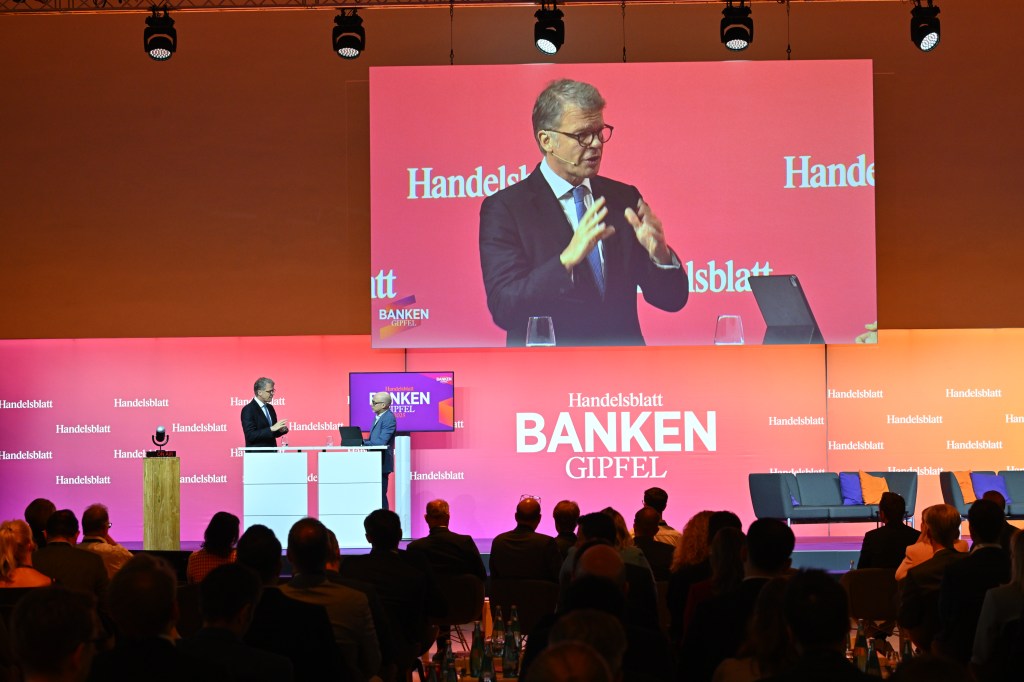
Handelsblatt Banking Summit 2025: Early Insights and Takeaways
The Handelsblatt Banking Summit 2025 brought together leading figures from Germany’s financial sector to discuss challenges, opportunities, and the future of banking in a rapidly changing world. Across a series of interviews and keynote speeches, participants highlighted themes ranging from regulation and innovation to strategic investments and the role of banks in supporting the broader…
-

Moody’s Expansion into Egypt: Implications for European Investors
Moody’s Corporation’s announcement of acquiring a majority stake in the Middle East Rating & Investors Service (MERIS) is more than a regional deal—it signals a strategic move with potential implications for European investors who are increasingly attentive to developments in emerging markets. For over two decades, MERIS has played a central role in Egypt’s capital…
-

Moody’s Makes Rare Interim Appointment: Andy Frepp Steps In as Interim President of Moody’s Analytics
It is not often that Moody’s Corporation resorts to an interim leadership solution. The company, known for its carefully managed and stable succession planning, has now appointed Andy Frepp, Chief Operating Officer of Moody’s Analytics, as Interim President of the division. The move follows the resignation of Stephen Tulenko, who is leaving Moody’s to pursue…
-

Continuation Funds on the Rise: Why Credit Rating Agencies Could Become Key Players in Private Equity’s Next Wave
Schroders Capital projects a fundamental shift in the private equity landscape. According to its latest analysis, the global market for continuation funds – often referred to as GP-led secondaries – is expected to quadruple over the next decade. The firm’s base scenario suggests that annual exit proceeds from such investments could exceed USD 300 billion…
-

Will Germany’s Proposed Pension Reforms Truly Strengthen Capital Markets – and Be Understood by All?
The 2025 coalition agreement marks a pivotal moment in Germany’s long-standing struggle to reform its private pension system. With the introduction of two major initiatives – the “Frühstartrente” (early-start pension) and the overhaul of the Riester pension – the government and banking associations aim to promote private capital formation and secure retirement income for future…
-

Ratings: The Key to Unlocking Private Equity Opportunities
The revised regulation on European Long-Term Investment Funds (ELTIF), which came into force in January 2024, marks a turning point for private investors. For the first time, they have broader access to asset classes such as private equity, private debt, and infrastructure—markets traditionally dominated by institutional investors. These private market investments offer attractive return potential,…
-

Europe’s Self-Inflicted Weakness: A Wake-Up Call Disguised as Opportunity
In an unusually blunt assessment, the latest commentary by Axel D. Angermann, Chief Economist, FERI Group, highlights a striking imbalance in transatlantic trade relations and issues a call to action for Europe’s political leadership. “The obvious weakness of the EU offers opportunities,” Angermann notes — an opening line that sets the tone for a piece…
-

Nordic Bonds: A Strategic Financing Tool for German Companies – The Case of JDC Group AG
In recent years, Nordic Bonds have emerged as an increasingly attractive financing instrument for mid-sized and high-growth companies across Europe. For German firms in particular, Nordic Bonds offer a flexible and investor-friendly alternative to traditional debt instruments, often providing access to international institutional capital without the regulatory hurdles of large-scale public bond issues. A recent…
-

Rating the Backbone: The Crucial Role of Credit Ratings in Assessing Systemically Important Tech Giants
In a world increasingly driven by a small number of powerful technology firms, the importance of timely and accurate credit ratings has never been higher. Companies such as TSMC, ASML, Microsoft, Apple, Google, Nvidia, Amazon, Meta, SAP, Oracle, Huawei, Ericsson, and ARM form the digital backbone of modern economies. Any disruption in their operations —…
-

Boom, Bust, and Polleit: The Economist Investors Can’t Ignore
In a time of growing economic distortion, monetary manipulation, and geopolitical uncertainty, discerning investors are increasingly seeking voices that go beyond the mainstream. One such voice—sharp, consistent, and grounded in decades of rigorous thought—is that of Dr. Thorsten Polleit. His Boom & Bust Report, launched in April 2024, has rapidly become essential reading for those who…
-

What All-Time Highs Really Mean for Credit Ratings
In the world of investing, the fear of market peaks is deeply rooted. Investors often hesitate to deploy capital when equity indices are at all-time highs, fearing an imminent correction. But this fear is not only frequently misplaced—it may also distort long-term financial strategies and, by extension, the interpretation of creditworthiness and risk metrics. Duncan…
-

Moody’s Delivers in Q2 — But Familiar Questions Linger
Moody’s Corporation posted a strong financial performance in the second quarter of 2025, continuing its momentum amid a complex and often volatile macroeconomic landscape. The company reported a 4% increase in revenue compared to the same quarter last year, with adjusted operating margin rising by 130 basis points to 50.9%. Adjusted diluted EPS also grew…
-

Why the Demands of the eIDAS Position Paper Would Enhance the Accuracy of Ratings
The introduction of the EUDI Wallet and the establishment of a trustworthy and widely adopted eIDAS ecosystem offer transformative potential—not only for digital administration and consumer services, but also for the world of credit ratings and risk assessments. Implementing the five demands outlined in the July 2025 position paper would significantly strengthen the foundations for…
-

After FINMA’s Greensill Ruling: Should Big Banks Rely Less on Rating Agencies and More on Internal Credit Research?
The collapse of Greensill Capital and the subsequent enforcement proceedings against Credit Suisse by the Swiss Financial Market Supervisory Authority (FINMA) offer a stark warning to the global banking sector. The comprehensive FINMA report, which details severe organizational failures and risk blind spots within Credit Suisse Asset Management (CSAM), raises a fundamental question: should large…
-

Could Recent Developments in Aberdeen’s Q3 House View Trigger Rating Agency Reactions?
Aberdeen Investments’ latest Q3 House View presents a cautiously optimistic outlook amid mounting geopolitical and economic uncertainty. But while investors are adjusting their strategies, a key question arises: Could these developments be significant enough to provoke a reassessment by credit rating agencies? Trade Policy and “US Exceptionalism” Under Scrutiny One of the report’s central themes…
-
European Investment Banking and Capital Markets Activity Slows in H1 2025: Implications for Rating Agencies
According to data from LSEG Deals Intelligence, investment banking fees (more precisely, commissions) in Europe totaled an estimated US$13.4 billion in the first half of 2025. This marks an 11% year-over-year decline, though still higher than the levels recorded in the first half of 2023 and 2022. Debt capital markets (DCM) underwriting commissions reached US$5.8 billion,…
-

The Credit Rating of the United States and the Emerging Role of the Euro: A New Global Currency Moment?
The Credit Rating of the United States and the Emerging Role of the Euro: A New Global Currency Moment? In a notable speech, European Central Bank President Christine Lagarde addressed the possibility of a “Global Euro Moment”—a historic opportunity for the euro to increase its significance as a global reserve currency. Her remarks coincide with…
-

Chile’s Financial Market Deepens as Moody’s Acquires ICR Chile
Chile’s financial market has long been one of the more stable and transparent systems in Latin America, marked by strong institutions and a deepening domestic capital market. In a move that underscores both Chile’s rising significance and the international appetite for quality credit information, Moody’s Corporation announced it has fully acquired ICR Chile, one of…
-

Profit Participation Plan of Moody’s Corporation: Perspectives of Shareholders and Plan Beneficiaries
For shareholders, the Profit Participation Plan offers several advantages that justify its implementation. First and foremost, it acts as a talent magnet and retention mechanism. In an industry where skilled labor is highly competitive, offering a robust retirement plan enhances Moody’s appeal as an employer. This stability in human resources can translate into consistent performance…
-

Interpreting UBP’s Outlook Amid Policy Shifts and Market Volatility
Disclaimer: The following interpretations are based on an analysis published by Union Bancaire Privée (UBP). They reflect possible implications and not definitive outcomes. These developments carry several implications for credit ratings across asset classes and regions. Macroeconomic Stability and Sovereign Ratings The stabilization of U.S. economic data and the subsiding recession risks may offer short-term…
-

Surprising U.S. Inflation Data for May Signals Limited Price Pressure
In a notable development for financial markets and monetary policy, U.S. consumer prices rose by just 0.1% in May, significantly below expectations. As a result, the annual inflation rate edged up only slightly, from 2.3% to 2.4%, while the core inflation rate—which excludes volatile food and energy prices—remained stable at 2.8%. These numbers highlight a…
-

Convertible Bonds: Stability and Credit Quality in Volatile Markets
In a market marked by volatility, global convertible bonds have outperformed both equities and traditional bonds in the first quarter of 2025, offering a unique blend of downside protection and growth potential.
-

Cyber Resilience, AI, and Growth: Shaping the Next Generation of Banking
The 20th annual conference of the Frankfurt School Forum brought together influential leaders, academics, and technology experts to explore the transformation of financial services in an era of unprecedented digital, geopolitical, and regulatory challenges. Under the banner “Next-Generation Financial Services 25: Cybersecurity, Threat Intelligence, Gen AI, Resilience,” the event highlighted critical success factors for resilient,…
-

Potential Consequences for Scope Ratings if Greensill Bank Allegations Are Confirmed
If the serious allegations surrounding the collapse of Greensill Bank are confirmed, significant consequences could loom for the Berlin-based credit rating agency Scope Ratings. As the agency to have provided Greensill Bank with a credit rating prior to its dramatic collapse in March 2021, Scope may face legal, reputational, and regulatory fallout. Legal Risks: Exposure…
-

MSCI and Moody’s Forge Strategic Alliance to Enhance Private Credit Risk Assessment
In a significant move to bolster transparency and consistency in the private credit market, MSCI Inc. (NYSE: MSCI) and Moody’s Corporation (NYSE: MCO) have announced a strategic partnership aimed at delivering independent risk assessments for private credit investments at scale. “As the private credit market continues to evolve and grow, the need for consistent standards…
-

The Relevance of EBA’s ESG Scenario Analysis Guidelines for Credit Rating Agencies
As climate change and broader sustainability considerations increasingly shape financial risk landscapes, the European Banking Authority’s (EBA) recent Guidelines on ESG Scenario Analysis represent a pivotal regulatory milestone. While primarily targeted at credit institutions, these guidelines carry substantial implications for credit rating agencies (CRAs), whose methodologies must keep pace with evolving definitions of risk. Aligning Credit Risk Assessment…
-

ESMA Imposes Fine on Modefinance S.r.l. for Misleading Use of Its Name
The European Securities and Markets Authority (ESMA) has fined the Italian credit rating agency Modefinance S.r.l. EUR 420,000 for breaching the Credit Rating Agencies Regulation (CRA Regulation). The penalty was imposed after the company was found to have misleadingly used ESMA’s name in statements regarding its credit rating activities. Misuse of ESMA’s Name According to…
-

Stable Credit Ratings Ahead, Amid Trade Tariffs: A Clear Framework for Negotiations
In response to the newly announced international trade tariffs, Johanna Kyrklund, Group Chief Investment Officer at Schroders, and George Brown, Economist at Schroders, provide insight into the economic implications, including potential effects on growth, inflation, and the most affected countries. While initial reactions have been negative, a closer analysis suggests that these developments may support…
-

The Issue of Implied State Support and the New BaFin Circular 06/2025 (BA) on the Exercise of the Option under Article 495e CRR
The topic of implied state support in financial regulations has been a matter of discussion for years, particularly in relation to credit assessments and risk-weighted assets under the Capital Requirements Regulation (CRR). The Bundesanstalt für Finanzdienstleistungsaufsicht (BaFin) has recently issued Circular 06/2025 (BA), which provides clarity on the exercise of the option under Article 495e…
-

European Investors Reassess US Equities as Bond Inflows Surge
European investors are rethinking their approach to US equities as the latest data from LSEG Lipper suggests a shift in sentiment. While 2024 saw strong inflows into the European fund industry—pushing assets under management (AUM) beyond €15.5 trillion—early 2025 has brought signs of caution. In particular, US equity ETFs experienced significant outflows of €1.44 billion…
-

Analysis of the FiDA Proposal from a Credit Rating Agency Perspective
The proposed Financial Data Access Regulation (FiDA) aims to enhance competition and innovation in the European financial market by facilitating data sharing. However, the Deutsche Kreditwirtschaft (DK) has raised significant concerns regarding its implementation, arguing that it imposes excessive burdens on financial institutions and lacks a well-defined scope. From the perspective of a credit rating…
-

Deutsche Bank’s 2024 Annual Report: Liquidity and Credit Ratings in Focus
The Deutsche Bank recently released its 2024 Annual Report, providing insights into its liquidity and capital management, as well as its credit ratings from major rating agencies. The report highlights the bank’s progress in strengthening its financial position, despite a dynamic economic and geopolitical environment. Liquidity and Capital Management The bank’s liquidity risk management is…
-

Regulatory Update: The Exercise of the Discretionary Right Under Article 495e CRR
The German Federal Financial Supervisory Authority (BaFin) has recently issued a draft circular (xx/2025 BA) concerning the exercise of the discretionary right under Article 495e of the Capital Requirements Regulation (CRR). This document provides guidelines for certain financial institutions on the continued use of External Credit Assessment Institution (ECAI) ratings that assume implicit government support…
-

A Political Defeat That Might Turn into an Opportunity
At first glance, failing to clear the five-percent hurdle in the 2025 Bundestag election seems like a catastrophic defeat for the FDP. Having lost significant support as a junior partner in the previous traffic light coalition, the party could not recover from its downward trajectory. However, when considering the political and economic realities of the…
-

Implications for Credit Ratings: Japan’s Market Transformation and Corporate Reform
Japan’s stock market is undergoing a fundamental transformation that goes beyond short-term cyclical trends, according to June-Yon Kim, Lead Portfolio Manager for Japanese equities at Lazard Asset Management. For decades, Japan’s equity market had been weighed down by deflation and structural inefficiencies. However, this has been followed by a prolonged phase of remarkable transformation, including…
-

Navigating the Fixed Income Landscape in 2025: A Strategic Perspective
The year 2025 has begun with volatility in fixed income markets, largely driven by fluctuations in 10-year Treasury yields. Inflation concerns and uncertainty regarding trade policy and the Federal Reserve’s monetary strategy have contributed to the unpredictable landscape. According to UBP, “The Fed remains cautious about further rate cuts due to persistent inflation, leading to…
-

Moody’s Margin Development: 2024 Performance and 2025 Outlook
Moody’s Corporation demonstrated strong margin expansion in 2024, driven by revenue growth, cost efficiency measures, and disciplined execution. The company’s operating margin increased from 36.1% in 2023 to 40.6% in 2024, reflecting higher revenue across both Moody’s Investors Service (MIS) and Moody’s Analytics (MA). Adjusted operating margin saw an even stronger improvement, rising from 43.9%…
-
Powering Financial Markets: The Pivotal Role of S&P Global Ratings
S&P Global Inc. (SPGI) has solidified its position as a leader in financial intelligence and analytics, with its Ratings business playing a crucial role in its sustained growth and profitability. As one of the world’s foremost credit rating agencies, S&P Global Ratings provides essential insights into credit risk, helping investors and institutions make informed decisions.…
-

Higher Price Elasticity of Demand: A Double-Edged Sword Amid Rising Tariffs on European Vehicle Makers
The introduction of higher tariffs on vehicle imports by the United States presents a complex challenge for European original equipment manufacturers (OEMs). While much of the focus has been on direct trade impacts and supply chain disruptions, there is a subtler economic dynamic at play: the role of price elasticity of demand. Higher price elasticity,…
-

In Memoriam: Prof. Dr. Horst Köhler (1943–2025)
The Scope Foundation mourns the loss of Prof. Dr. Horst Köhler, a distinguished member of its Honorary Board. His passing marks the end of a remarkable career, but his legacy will endure through the institutions and initiatives he helped shape.
-

Industrial Real Estate Market Outlook 2025: Key Trends and Insights
The industrial real estate sector continues to evolve amidst changing market conditions. The IndustrialPort Observer 2025 survey gathered insights from industry experts, including property owners, asset managers, and appraisers, to assess the market sentiment and forecast trends for the coming year. Market Sentiment: A Shift Towards Caution The survey indicates a shift towards a more…
 ^^^ RATING EVIDENCE GmbH