
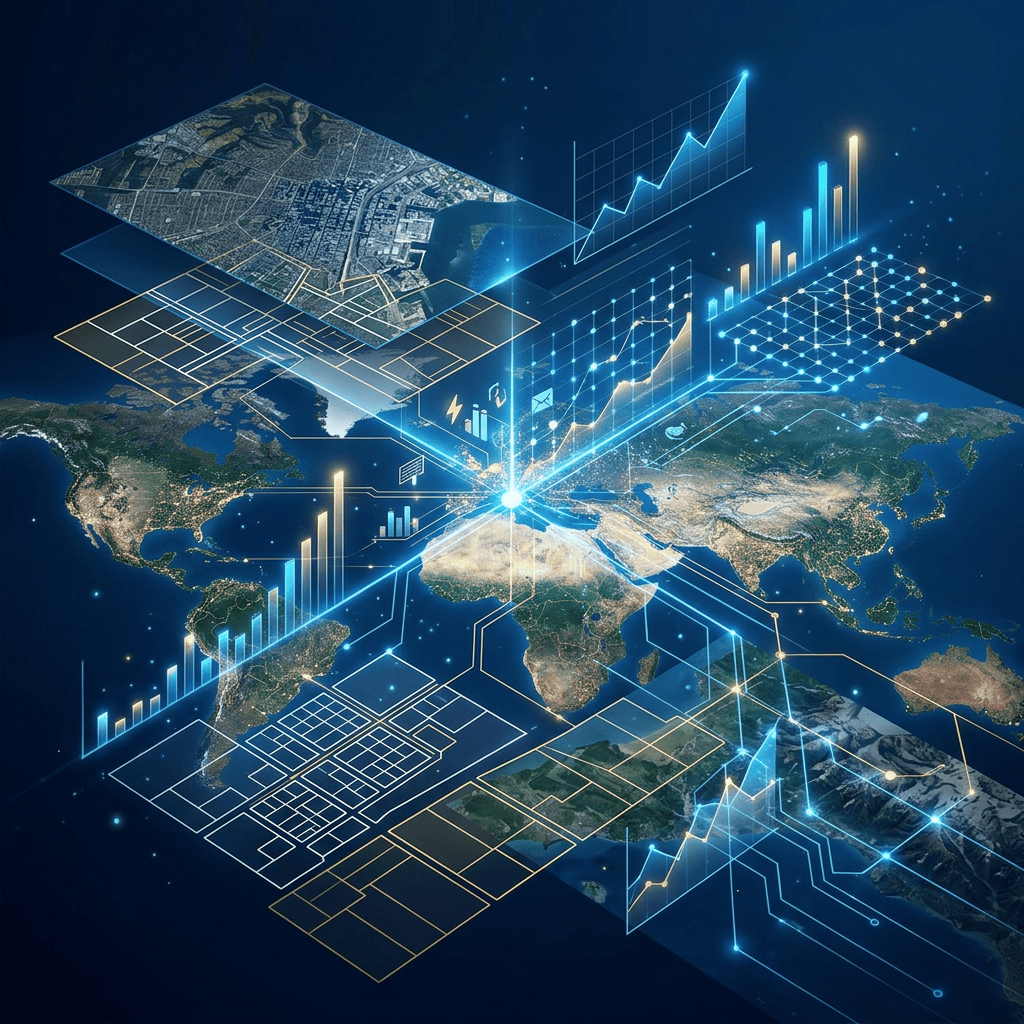
The current reporting season raises a fundamental question for investors: Are technology companies investing enough in the right technologies – or simply investing more?
As Dr. Georg von Wallwitz of Eyb & Wallwitz observes, “good numbers alone are no longer enough.” The enormous capital expenditure of the hyperscalers on AI infrastructure has already raised doubts about whether these investments will ultimately generate the expected returns. At the same time, the market is beginning to distinguish more carefully between technological promise and economic value.
This discussion is highly relevant to another technological field that has so far received far less attention: spatial computing.
While AI has attracted hundreds of billions of dollars in infrastructure investment, the potential of spatial computing to transform how financial and business information is understood remains largely unexplored. The issue is not whether three-dimensional visualization looks impressive. It is whether spatial environments can create better ways of analysing complexity, dependencies and risk.
This is precisely where Data2Space sees an opportunity.
From more data to a different way of thinking
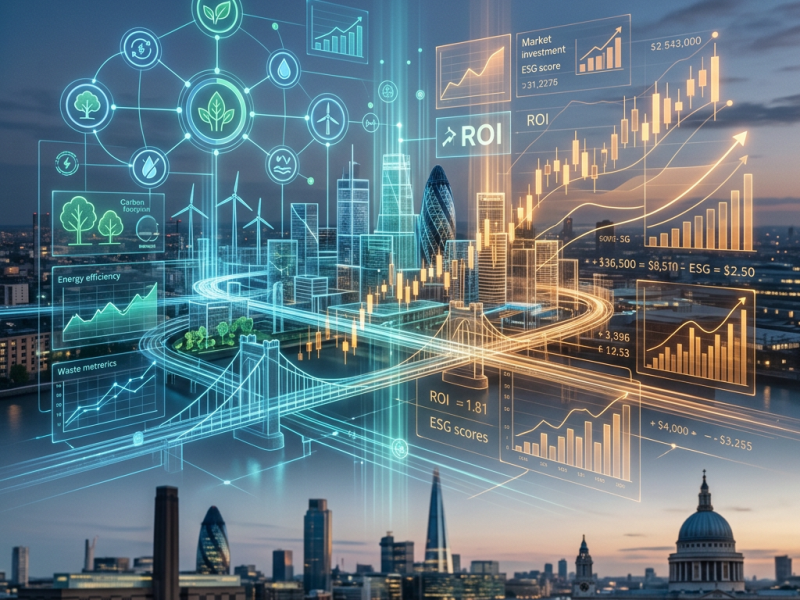
Financial models, ownership structures, supply chains, credit relationships and ESG dependencies are usually presented on flat screens. Complex relationships are reduced to tables, charts and diagrams. Even sophisticated AI systems ultimately deliver their results through interfaces that remain predominantly two-dimensional.
Spatial computing changes the question from “How can we display more information?” to “How can we interact with information differently?”
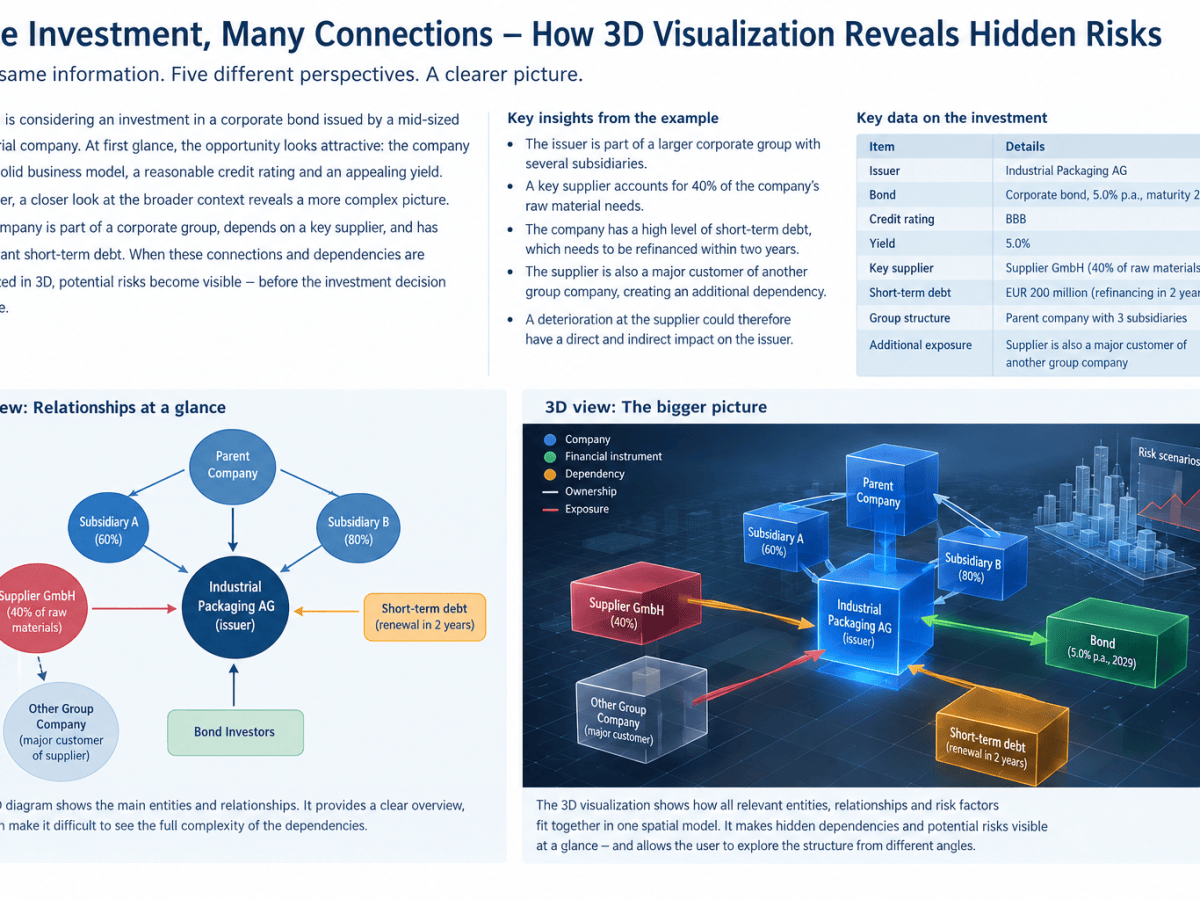
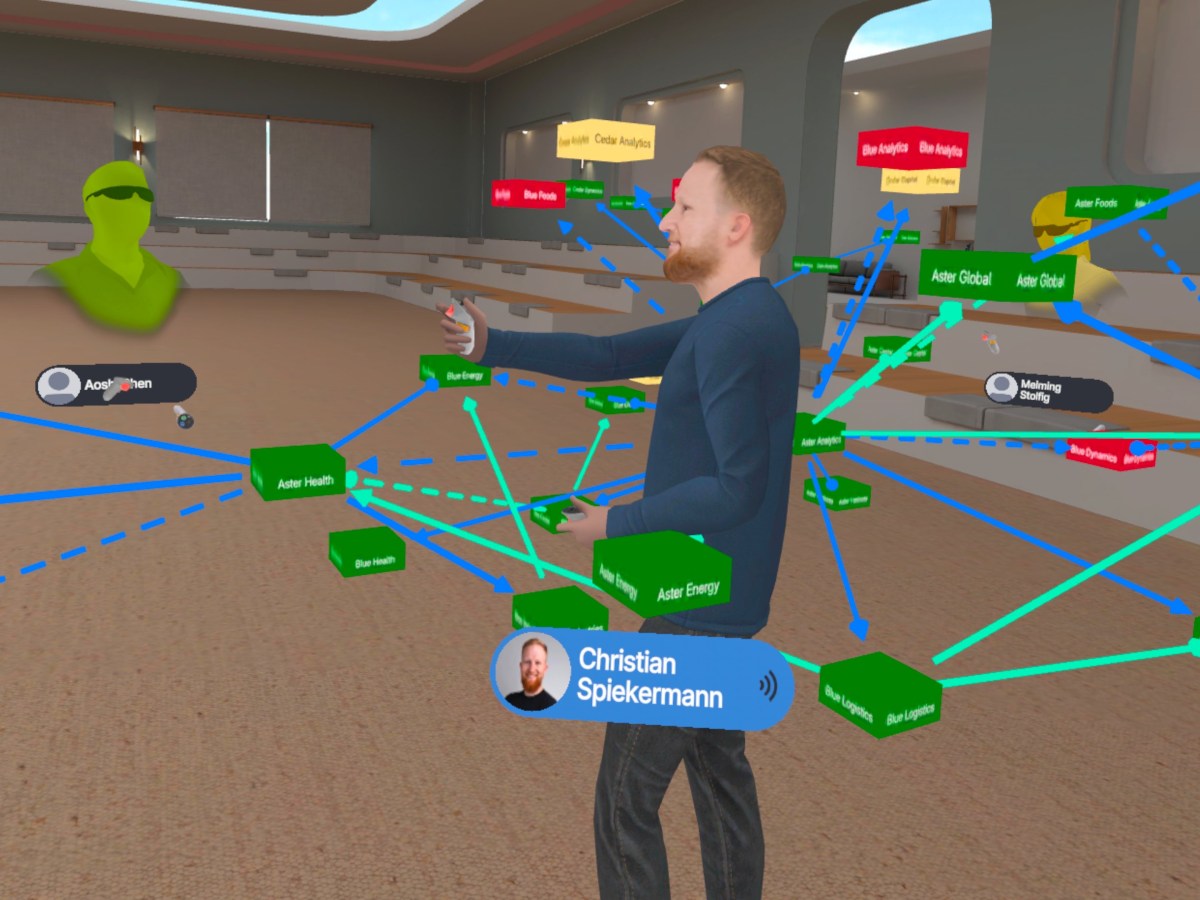
Data2Space transforms business and financial relationships into spatial structures. A company can become an element in a three-dimensional network; ownership relationships can be examined from different perspectives; financial instruments, subsidiaries and dependencies can be positioned within the same information space.
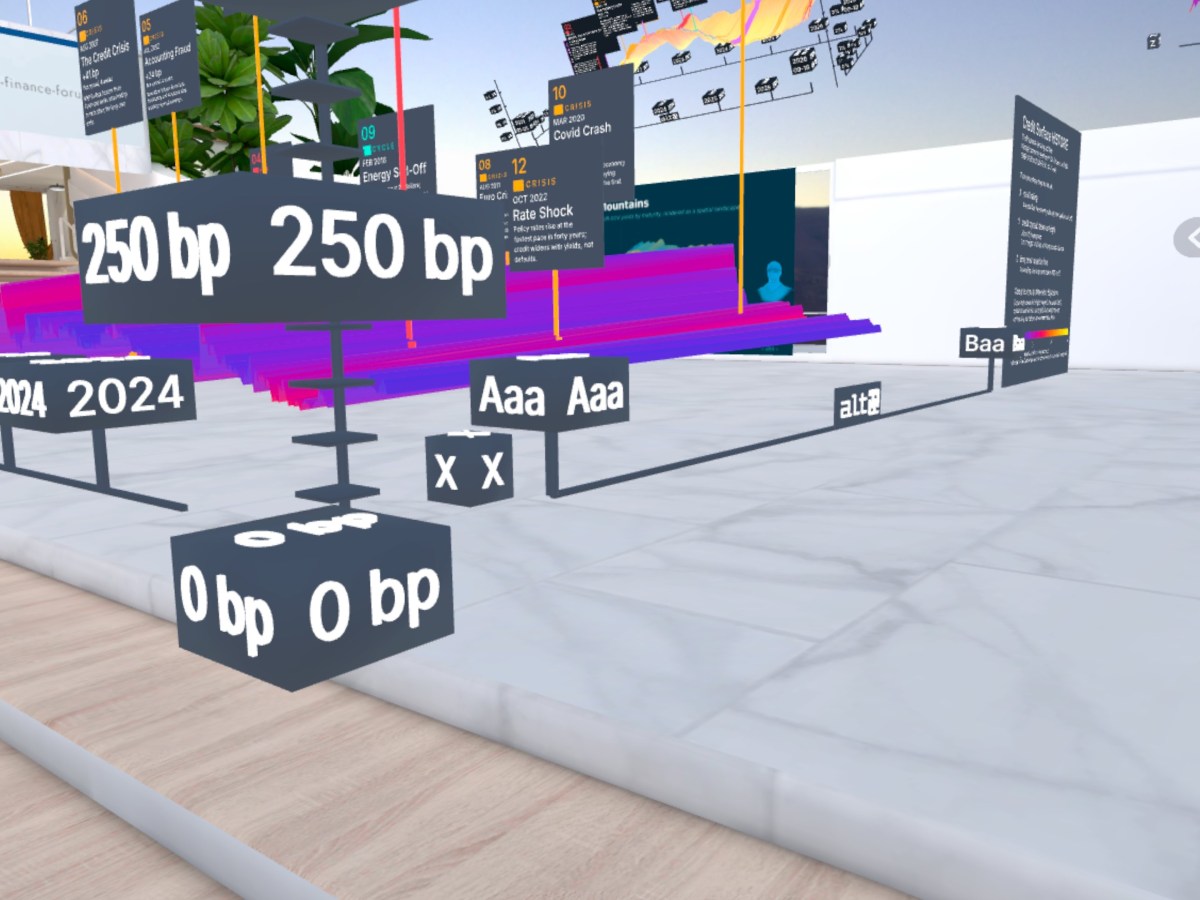
The user does not merely look at a model. The user enters the model.
This creates an interesting complement to AI. AI can analyse enormous amounts of data and identify relationships that humans might overlook. Spatial computing can then make these relationships accessible to human judgement.
That distinction becomes particularly important in finance. Von Wallwitz warns that “if the AI trade does not deliver the enormous productivity gains many expect, the market is simply very expensive.” The same principle applies to corporate and investment analysis: sophisticated technology only creates value if it improves decisions.
Spatial computing as the missing layer
The current AI investment cycle has focused heavily on computation, data centres and model capabilities. The next question should be how humans interact with the results.
Spatial computing could become an important layer between AI-generated analysis and human decision-making.
Imagine an AI system identifying hundreds of relevant ownership, credit, ESG or supply-chain relationships. Instead of presenting the findings as another dashboard, Data2Space can potentially place them into a spatial environment in which an analyst can move around the structure, isolate individual relationships, compare perspectives and combine different models.
The opportunity is therefore not to compete with AI, but to give AI-generated knowledge a spatial context.
The market’s growing sensitivity to capital allocation may ultimately make this distinction more important. As Fitzner notes, “negative surprises are currently being punished much more strongly than positive surprises are being rewarded.”
In such an environment, the quality of analysis—and the ability to understand interconnected risks—becomes increasingly valuable.
The investment opportunity nobody is talking about yet
The extraordinary attention given to AI may therefore obscure another technological opportunity. Spatial computing is still relatively early in its adoption curve, particularly in finance. Yet the underlying problem it addresses is already obvious: financial complexity is growing faster than the traditional interfaces used to understand it.
Data2Space is exploring this largely unused space between financial data, AI analysis and human cognition.
The question may ultimately not be whether spatial computing can replace the traditional screen. It may be whether, in an increasingly complex financial world, the screen itself has become too small.












Leave a Reply