

How can complex financial information be communicated in a way that it is not merely seen, but immediately understood and experienced?
This is the central question addressed by the Immersive Finance Forum (iff), a series of events exploring the potential of virtual reality, 3D visualization and immersive communication in finance.
The next event takes place on Tuesday, October 13, 2026, at 6:30 p.m. CET and will be held in German. Under the title “Walk the markets, tell the fund’s story,” Christian Salow of altii GmbH will demonstrate how financial markets, market movements and the history of a fund can be transformed into walkable 3D environments.
Click here for free registration.
The event takes place in Arthur on Meta Quest, allowing participants to experience the concepts directly rather than simply watching a conventional presentation.
From Looking at Data to Entering the Data
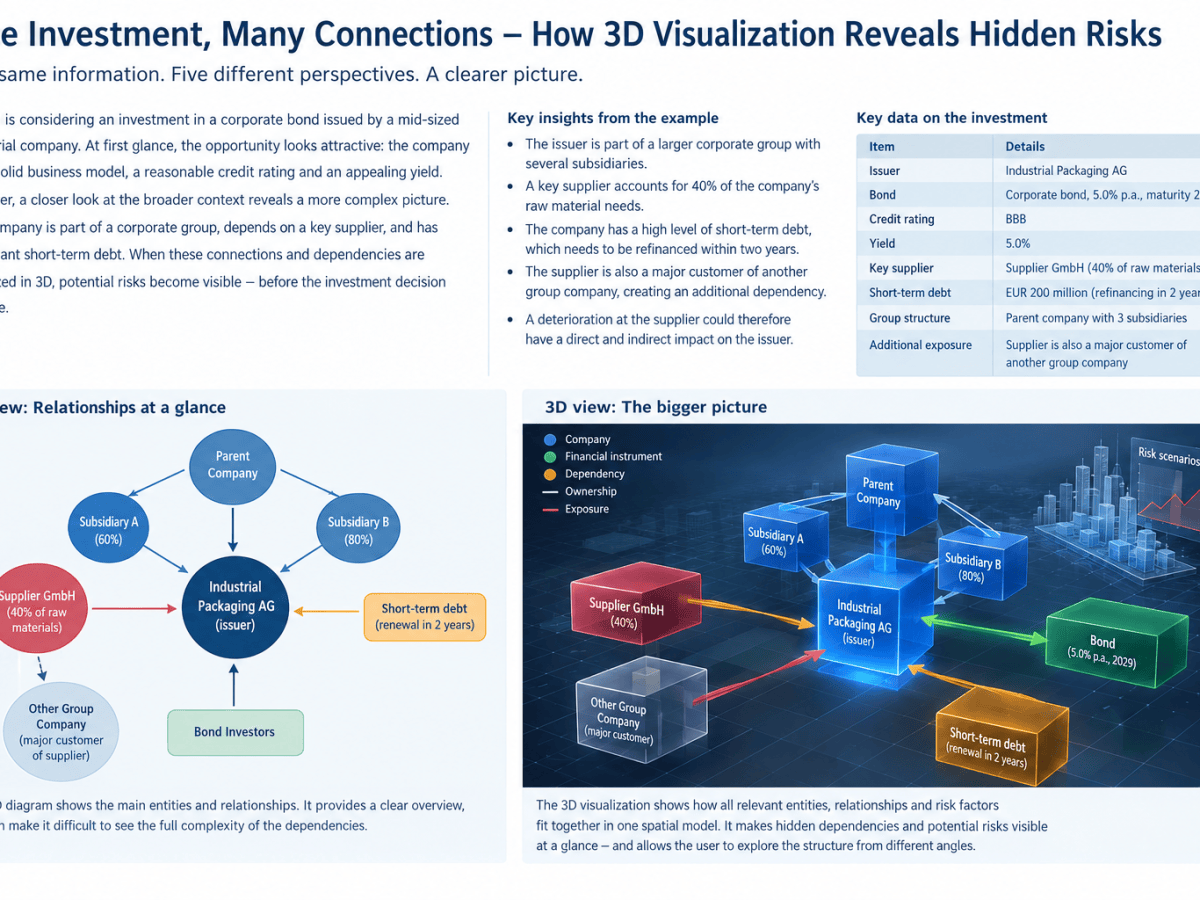
Traditional financial communication relies heavily on tables, charts and presentation slides. These formats are extremely useful, but they generally require the audience to mentally translate two-dimensional representations into an understanding of relationships and developments.
Immersive visualization introduces another possibility.
Instead of looking at a yield curve on a screen, participants can potentially stand on the curve, move along it and explore its development spatially. Financial information becomes something that can be navigated rather than merely observed.
This creates new possibilities for:
- understanding complex relationships between financial variables;
- exploring historical market developments;
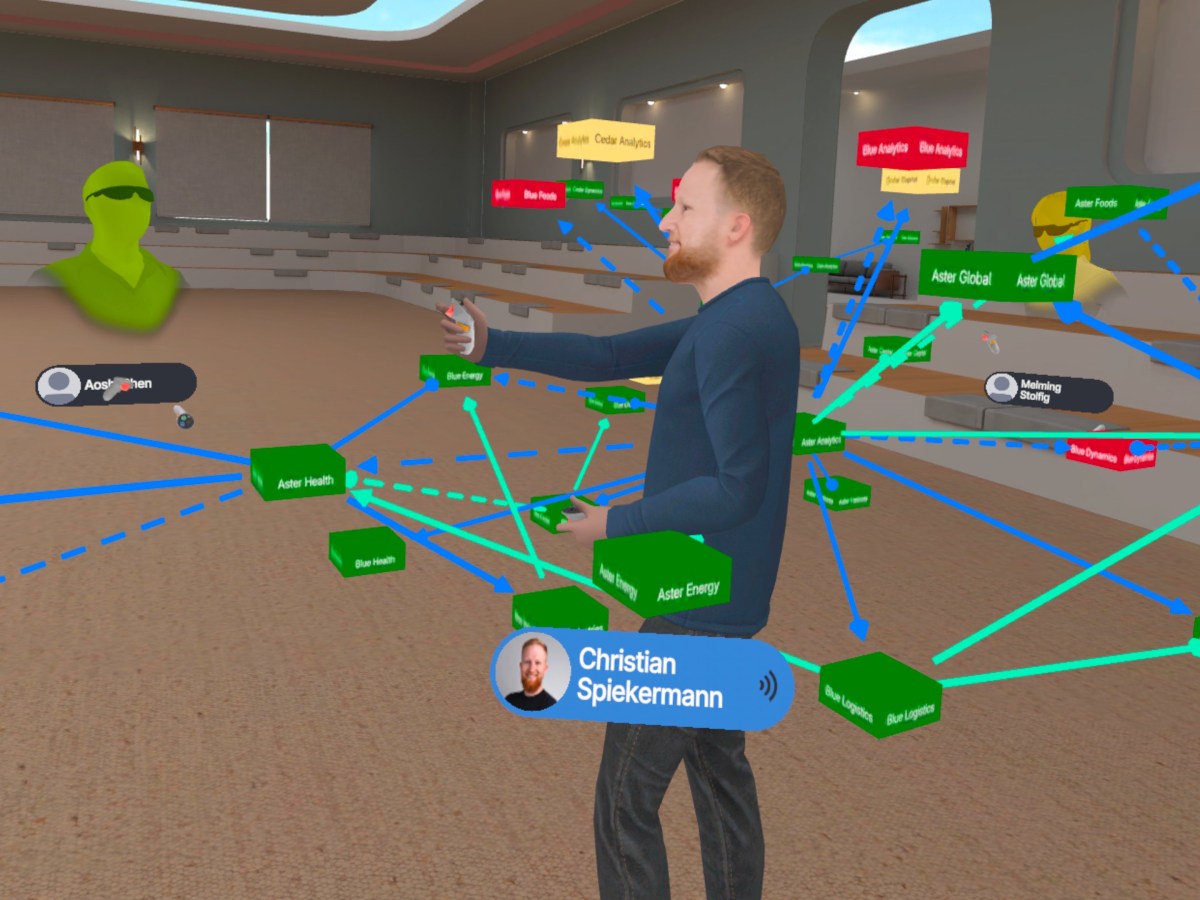
- discussing data collaboratively;
- changing perspectives by moving through a 3D environment;
- communicating investment concepts to clients and investors;
- presenting the history and development of financial products;
- creating more memorable forms of financial storytelling.
The key idea is not simply to make financial information look more impressive. It is to use spatial representation as a new interface between data, analysis and human understanding.
The Interest-Rate Mountain
One of the most striking examples is the so-called “interest-rate mountain.”
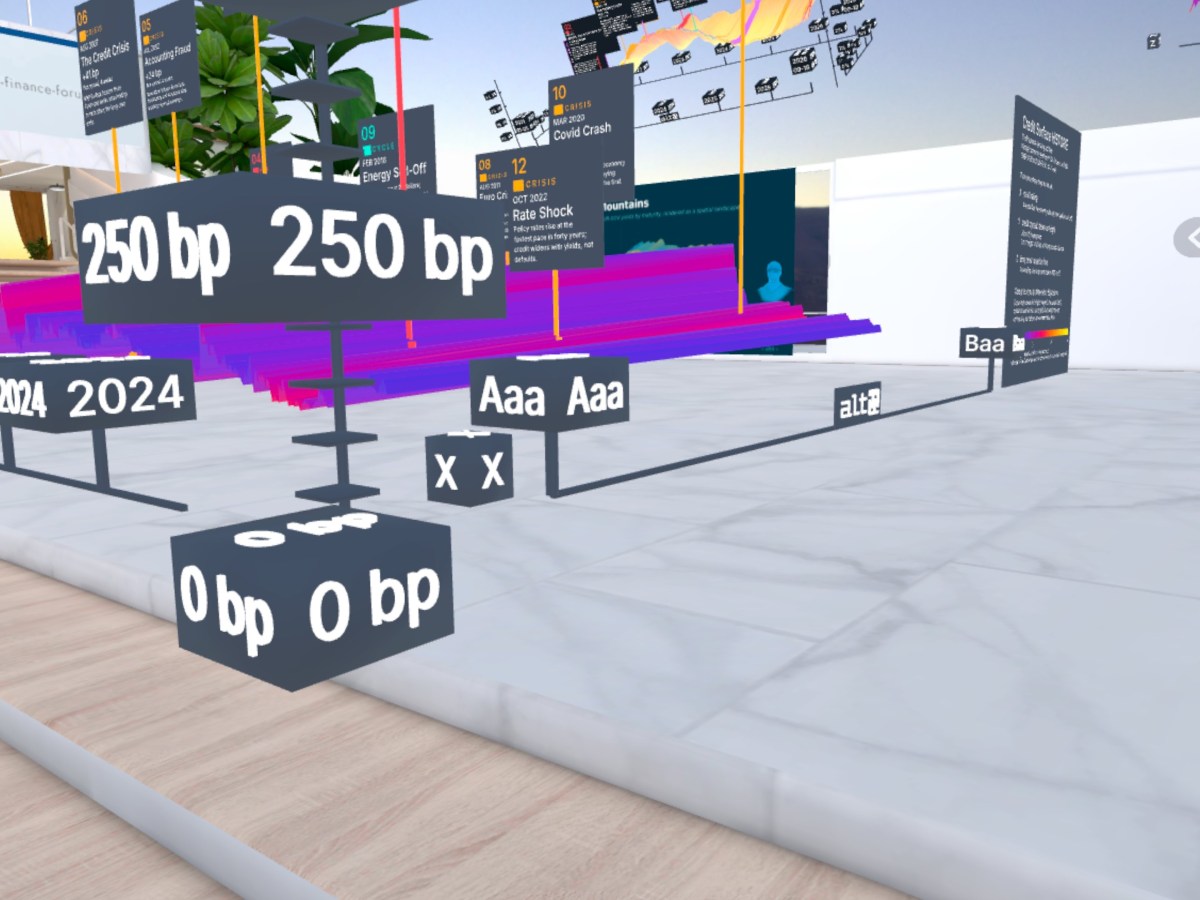
European government bond yields are represented as a landscape of valleys and peaks. Periods of negative interest rates can appear as deep valleys, while major market movements — such as the inflation shock of 2022 — can create distinctive formations in the landscape.
Instead of seeing several lines on a chart, participants can explore the development as a spatial structure.
The same concept can be applied to other financial datasets:
| Financial information | Immersive representation | Possible application |
|---|---|---|
| Government bond yields | Interest-rate mountain | Exploring yield-curve developments |
| Volatility | Volatility mountain | Understanding changes in market risk |
| Credit spreads | Credit mountain | Exploring credit-market dynamics |
| Market expectations | Expectations landscape | Comparing anticipated market developments |
| Fund performance | Fund landscape / architecture | Communicating performance history |
| Economic events | Spatial timeline | Connecting markets with macroeconomic developments |
The spatial dimension can provide an additional layer of context: individual data points are no longer isolated figures but become part of a larger environment.
Telling the Story of a Fund
The second focus of the event is particularly interesting for asset managers.
Financial products have histories. Funds are influenced by market cycles, economic developments, investment decisions and major external events. Yet these stories are traditionally communicated through a combination of charts, factsheets and written commentary.
The Fund Helix offers a different approach.
Imagine a walkable spiral building in which the history of a fund unfolds as participants move upward through the structure.
On the inside of the helix, the key milestones of the fund’s development can be displayed. On the outside, the market and economic developments that influenced the fund can be presented.
Walking through the helix therefore becomes a journey through the history of the investment product:
year → market environment → fund development → key events → investment story
This creates a direct spatial connection between what happened in the wider market and how the fund evolved.
A New Form of Financial Storytelling
The potential significance of this approach extends beyond virtual reality itself.
Immersive environments can combine three elements that are often separated in conventional financial communication:
- Data — the underlying financial information.
- Context — the market and economic developments surrounding the data.
- Narrative — the story that explains why the developments matter.
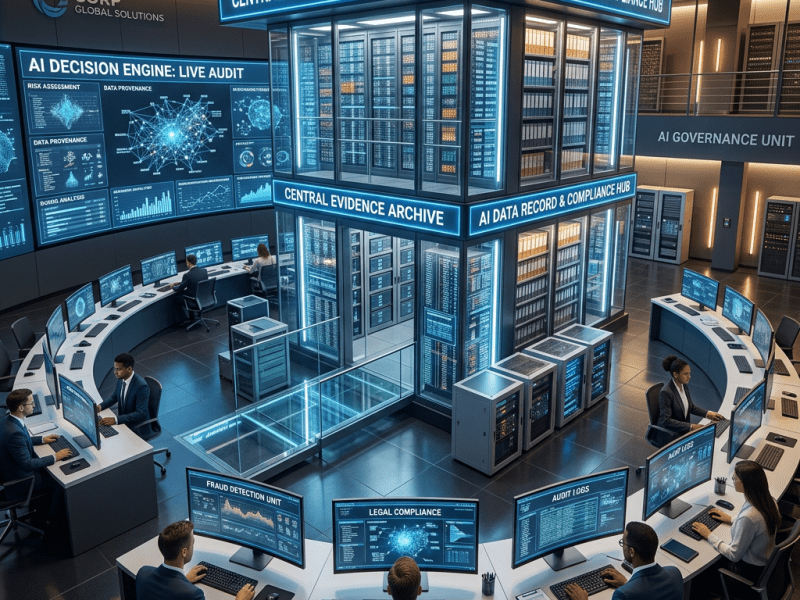
This combination could be particularly relevant for asset managers, banks, financial institutions and other organizations that need to explain complex information to different audiences.
A Fund Helix, for example, could be populated with real data for a new fund within a matter of days. The architecture therefore becomes more than a visual experience: it can function as a reusable framework for structured financial communication.
Why the Event Is Relevant
The Immersive Finance Forum is particularly interesting for anyone exploring how immersive technologies could change the way financial information is presented and discussed.
The event offers an opportunity to explore questions such as:
- Can spatial visualization make complex financial relationships easier to understand?
- How can investors explore market developments together rather than simply viewing charts?
- How can asset managers communicate the history of a fund more effectively?
- What happens when financial data becomes an environment rather than a slide?
- How could immersive environments support client meetings, presentations and internal collaboration?
- Where does virtual reality create genuine value beyond conventional 2D visualization?
These are not purely technological questions. They concern the fundamental relationship between financial data and human comprehension.
Finance Beyond the Screen
The Immersive Finance Forum takes place every second Tuesday of the month at 6:30 p.m. CET. It brings together people interested in finance, visualization, virtual reality and the future of immersive communication.
The underlying idea is simple but potentially far-reaching: financial information does not necessarily have to remain confined to screens, charts and tables.
With immersive technologies, markets can become landscapes, financial histories can become architecture, and complex datasets can become spaces that people explore together.
The upcoming session with Christian Salow provides an opportunity to experience this approach first-hand in Arthur on Meta Quest.
Event at a Glance
| Details | |
|---|---|
| Event | Immersive Finance Forum |
| Next session | “Walk the markets, tell the fund’s story” |
| Date | Tuesday, October 13, 2026 |
| Time | 6:30 p.m. CET |
| Language | German |
| Speaker | Christian Salow, altii GmbH |
| Platform | Arthur |
| Device | Meta Quest |
| Participation | Free |
| Format | Immersive virtual event |
A Chance to Experience the Future of Financial Communication
For anyone interested in how financial data can become walkable worlds, the October 13 event is an opportunity to experience an emerging form of financial communication directly.
The Immersive Finance Forum demonstrates how virtual reality can move beyond entertainment and gaming and become a tool for analysis, presentation, communication and collaboration.
The most interesting aspect may ultimately be the simplest one: instead of asking people to understand increasingly complex financial charts, why not give them an environment in which they can explore the underlying information themselves?
Experience finance in a new dimension.
Participation is free. Registration is available through the Immersive Finance Forum website. After registration, altii, the operator of the iff website and supporter of the project, sends a confirmation link. The registration is completed only after this link has been clicked.















Leave a Reply