

From a Culture of Saving to a Culture of Investing
Germany has traditionally been regarded as a nation of savers. Financial security, capital preservation and a cautious approach to investment decisions have shaped the country’s financial culture for generations. While this conservative mindset has provided stability and financial resilience, it may also be preventing millions of German households from fully realising their wealth-building potential.
At a time when inflation, demographic change and increasing pressure on public pension systems are challenging traditional concepts of financial security, one fundamental question deserves greater attention: How much wealth could Germans accumulate if they invested a larger proportion of their savings in return-generating financial instruments rather than leaving most of their available capital in traditional savings accounts?
The answer could have significant implications not only for individual households but also for Germany’s economic prosperity as a whole.
The Savings Paradox: Security Today, Opportunity Costs Tomorrow
The findings of the Edelmetallstudie Deutschland 2026, conducted by the University of St.Gallen (HSG) in collaboration with philoro EDELMETALLE and based on a representative online survey of 3,216 respondents, illustrate the persistence of Germany’s conservative investment preferences.
When asked where they would invest a larger amount of money, 47% selected fixed-term or overnight deposits. ETFs were chosen by 35%, while 27% named current or traditional savings accounts. Gold was selected by approximately 24%.
These figures reveal a striking imbalance: traditional deposit-based products remain more attractive to many Germans than investment instruments that offer participation in capital market growth.
This preference is understandable. Savings accounts are familiar, accessible and generally associated with security. However, their perceived safety can come at a considerable long-term opportunity cost.
When returns fail to compensate for inflation, the real purchasing power of savings declines. Even when interest rates are positive, deposit accounts may not offer sufficient long-term growth to meet retirement, wealth accumulation or intergenerational wealth transfer objectives.
The challenge is therefore not to abandon security, but to redefine what financial security means over the long term.
True financial security requires more than protecting nominal capital. It also requires protecting and increasing purchasing power.
The Power of Compounding: Small Changes, Significant Results
One of the most important mechanisms in long-term wealth accumulation is compound growth.
Consider a household that invests €250 per month over a period of 30 years. Assuming a constant annual return of 2%, the resulting capital would be approximately €123,000. At an average annual return of 5%, it would grow to approximately €208,000. At 7%, the accumulated amount would approach €305,000.
These are illustrative calculations, not return forecasts. They assume monthly contributions, reinvestment of returns and constant annual growth, without taxes, fees or inflation adjustments. The difference demonstrates how strongly long-term wealth accumulation depends on the returns achieved on invested capital.
The central point is that the investment of savings, rather than savings alone, can become a decisive driver of private wealth creation. Even relatively modest changes in investment behaviour can therefore produce substantial differences over several decades. For a country with a large household savings base such as Germany, the aggregate implications could be considerable.
The Missing Link: Financial Literacy and Confidence in Investment Decisions
The 2026 study suggests that Germany’s investment gap is not simply a question of willingness or financial resources. Knowledge and accessibility also play important roles.
Among respondents who had never invested in precious metals, 26% cited a lack of knowledge about how to proceed. A further 37% said that purchasing precious metals was financially unaffordable.
At the same time, 55% of respondents considered precious metals to be a rather or very sensible investment.
This gap between positive attitudes and actual investment behaviour points to a broader structural problem: many people recognise the potential value of alternative investments but lack the confidence, knowledge or practical tools to make informed decisions.
The situation is particularly interesting among younger generations. The intention to invest in precious metals within the next twelve months was 26.9% among respondents aged 30–39 and 21.9% among those aged 18–29, compared with 14.3% among those aged 60 and above.
These results suggest that younger Germans may be more open to expanding their investment horizons.
However, willingness alone is insufficient. Investors need understandable information, transparent products and reliable methods of assessing risk.
Risk Should Be Measured, Not Feared: The Potential of Rating Methodologies
One of the most important barriers to a broader investment culture is the perception that higher returns inevitably require taking uncontrolled risks.
This perception can be addressed through the systematic application of rating methodologies.
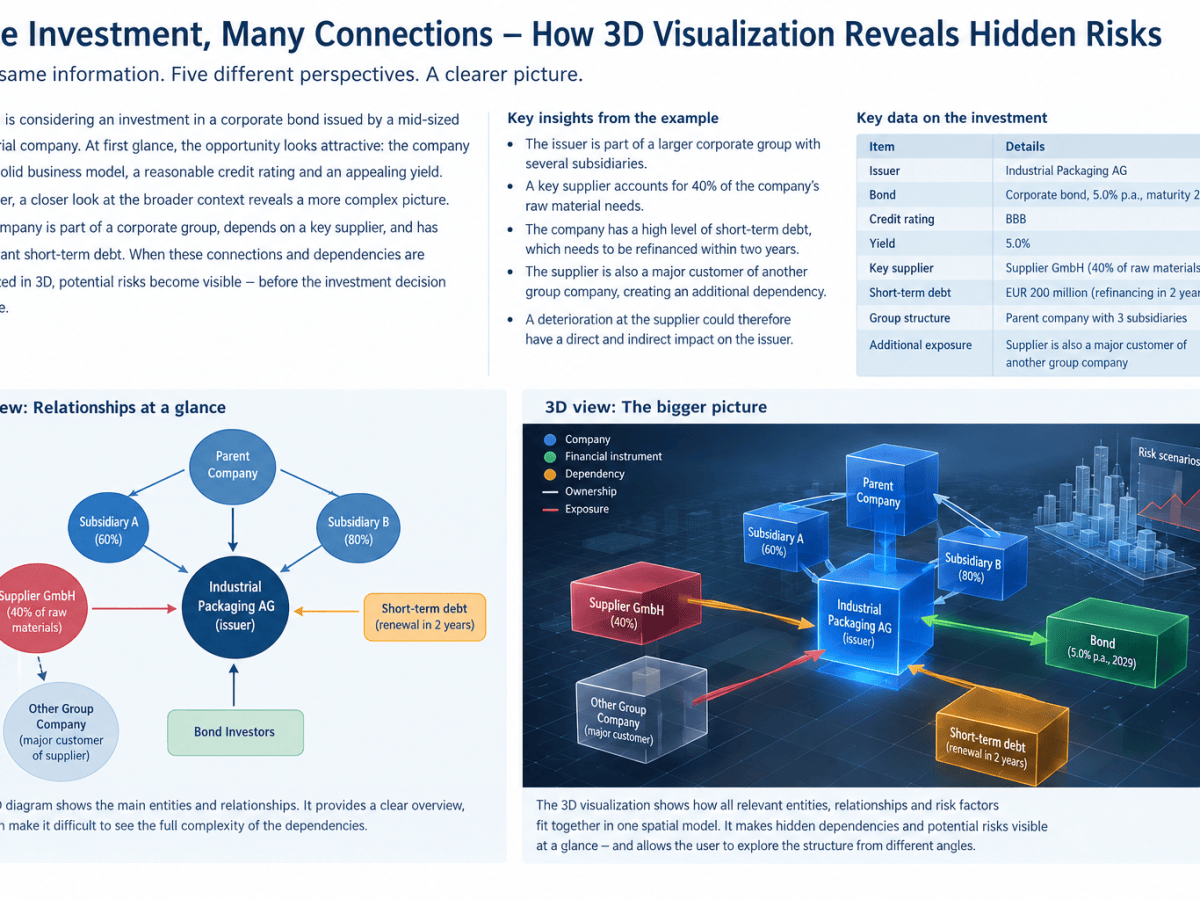
Ratings provide a structured framework for assessing and comparing the risk characteristics of different investments. Rather than relying exclusively on personal impressions, advertising claims or historical performance, investors can use standardised criteria to evaluate relevant risk factors.
Depending on the asset class and methodology, these may include:
- Market and price volatility.
- Liquidity and the ability to sell an investment when required.
- Credit and counterparty risk.
- Issuer quality and financial stability.
- Concentration risk.
- Currency exposure.
- Custody, storage and operational risks.
- Historical drawdowns and potential capital losses.
The objective is not to eliminate investment risk. That would be unrealistic. The objective is to make risk more visible, comparable and understandable.
A well-designed rating framework could help private investors distinguish between investments with different risk profiles and select instruments that correspond to their individual financial objectives, investment horizons and risk tolerance.
It is important, however, to distinguish between a credit rating and a broader investment risk rating. A credit rating primarily assesses the ability and willingness of an issuer or debtor to meet financial obligations. It does not automatically assess the market risk or suitability of an investment. For this reason, a comprehensive investment assessment should incorporate several dimensions of risk.
Such an approach could help transform the traditional German preference for security into a more informed and sophisticated investment strategy.
Diversification: Moving Beyond the Savings Account
The objective should not be to replace savings accounts with a single alternative asset class. Rather, Germany needs a more diversified approach to private wealth management.
Different asset classes fulfil different functions within a portfolio.
Equities and ETFs can provide long-term participation in corporate earnings and economic growth. Bonds can contribute income and portfolio stability, depending on their duration and credit quality. Real estate can provide tangible assets and potential rental income, while precious metals can serve as a diversification component and, in some circumstances, a store of value.
The Edelmetallstudie 2026 offers interesting insights into the role of gold in German investment preferences. Among respondents, 53% expressed greater confidence in gold than in the euro as a store of value. When compared with the US dollar, the figure increased to 70%.
Furthermore, among those who had already invested in precious metals, the most frequently cited motivations included appreciation and profit (38%), stability and preservation of value (36%), and protection against inflation (31%).
These findings indicate that precious metals are increasingly perceived not merely as traditional physical assets but as components of a broader wealth preservation and diversification strategy.
Nevertheless, gold should not be confused with a conventional income-generating investment. It does not produce interest or dividends, and its market price can fluctuate considerably. Its role in a portfolio should therefore be assessed in relation to the investor’s overall objectives and risk profile.
The Economic Opportunity for Germany
The implications of a more investment-oriented savings culture extend beyond individual households.
Germany faces significant structural challenges, including an ageing population, rising pension expenditure and the need for substantial investment in infrastructure, technology and the energy transition. A population that relies predominantly on low-return deposit products may find it increasingly difficult to build sufficient private retirement capital. A broader participation in capital markets could help households benefit more directly from corporate growth and economic productivity.
It could also strengthen the domestic investment culture, encourage financial innovation and increase public understanding of capital markets.
The potential is particularly relevant when considering the study’s findings on available savings capacity. More than half of respondents reported that their potential monthly savings rate had declined or remained limited. In fact, 41% said that their monthly savings capacity had decreased over the previous three years. This highlights an important distinction: the solution cannot simply be to ask people to save more. Many households already face financial constraints.
Instead, the focus should be on making better use of the capital that people are actually able to set aside. Even small, regular investments can make a meaningful difference when combined with long-term horizons, reasonable costs and disciplined risk management.
From Financial Conservatism to Financial Competence
Germany does not need to abandon its traditional preference for financial stability. It needs to modernise it.
The next step in the evolution of private wealth management should be a transition from an almost exclusive focus on nominal capital preservation towards a more comprehensive understanding of financial security. This means recognising that inflation risk, opportunity cost and insufficient long-term returns can be just as relevant as market volatility. It also means giving investors access to better information and tools.
Standardised rating methodologies, transparent product comparisons, accessible investment education and professional advice could help make investment decisions more understandable and less intimidating.
A rating-based approach would be particularly valuable if it were independent, transparent, regularly updated and clear about its limitations. Ratings should support individual judgement, not replace it or create a false impression of guaranteed safety.
Investors must also retain sufficient liquidity for emergencies and short-term financial obligations before committing capital to investments with market risk.
Conclusion: Germany’s Wealth Potential Is Waiting to Be Unlocked
The Edelmetallstudie Deutschland 2026 reveals a country in which traditional saving remains deeply rooted, but where interest in alternative investments and wealth preservation is clearly present.
The opportunity lies in connecting these two worlds.
Germany could unlock considerable private wealth potential if more households learned to move beyond traditional savings accounts and considered a broader range of return-generating investment instruments.
The key is not speculation, excessive risk-taking or abandoning security. It is informed diversification, long-term thinking and systematic risk assessment.
By combining the traditional German virtues of discipline and financial prudence with modern investment strategies and rating-based risk transparency, the country could establish a stronger foundation for private wealth creation.
The future of German prosperity may depend not simply on how much Germans save, but on how intelligently they invest what they save.

















Leave a Reply