
Data has become one of the most important resources in modern business. Companies rely on increasingly complex information to understand markets, evaluate investments, manage risks, and make strategic decisions. Yet having access to large amounts of data is only part of the challenge. The real difficulty lies in making complex information understandable and revealing the relationships hidden within it.
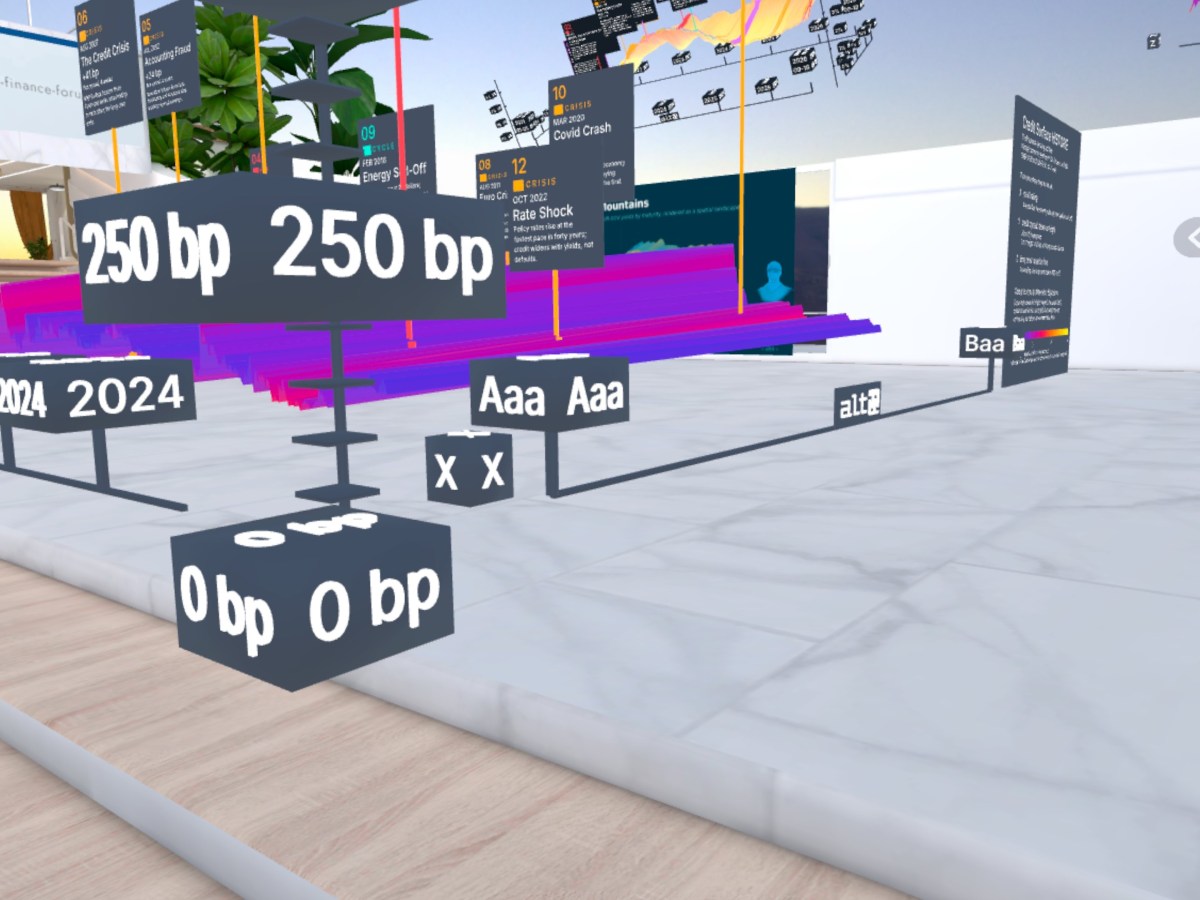
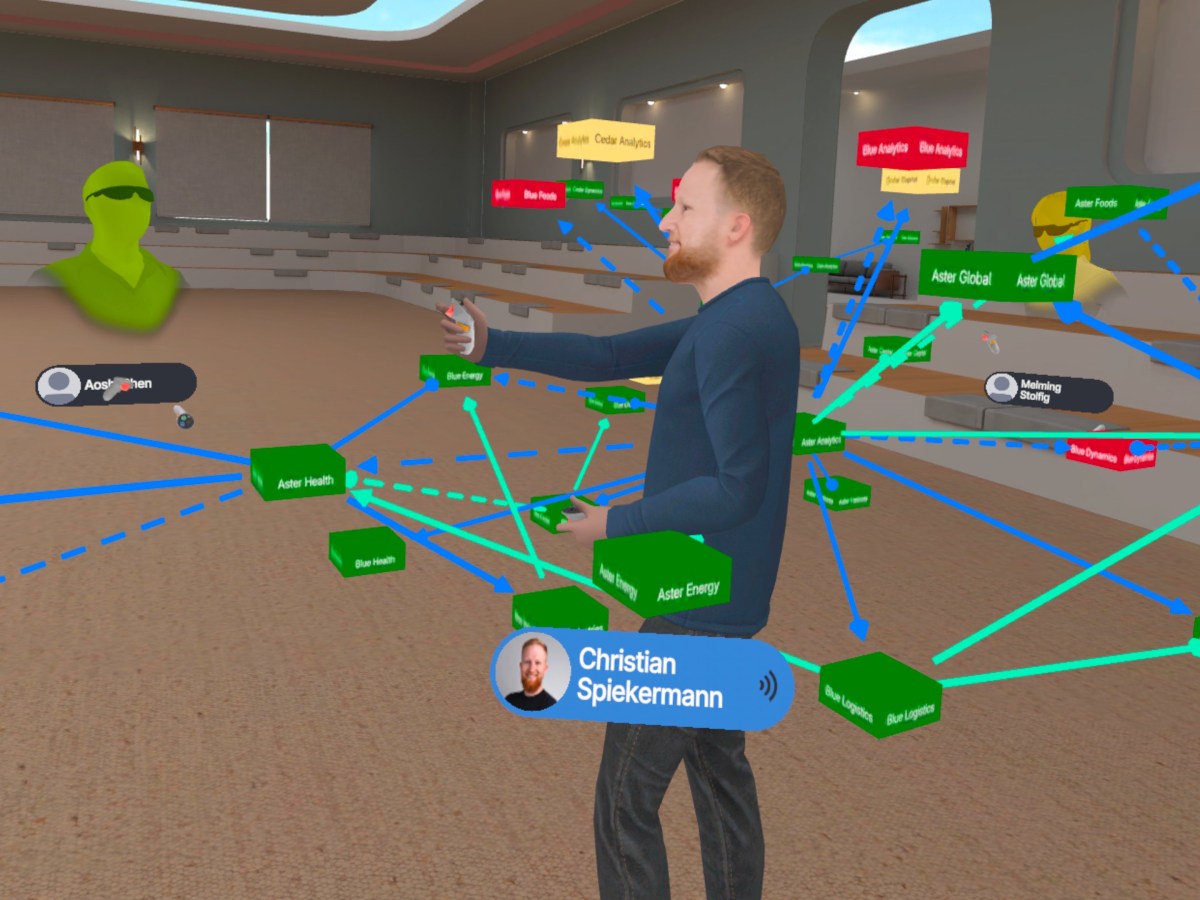
This is where Data2Space takes a different approach. Developed by RATING EVIDENCE GmbH, Data2Space combines data visualization with immersive technologies to create interactive three-dimensional environments for financial and business information. Instead of presenting data exclusively through spreadsheets, charts, or conventional dashboards, the platform places information into a spatial context that users can explore.
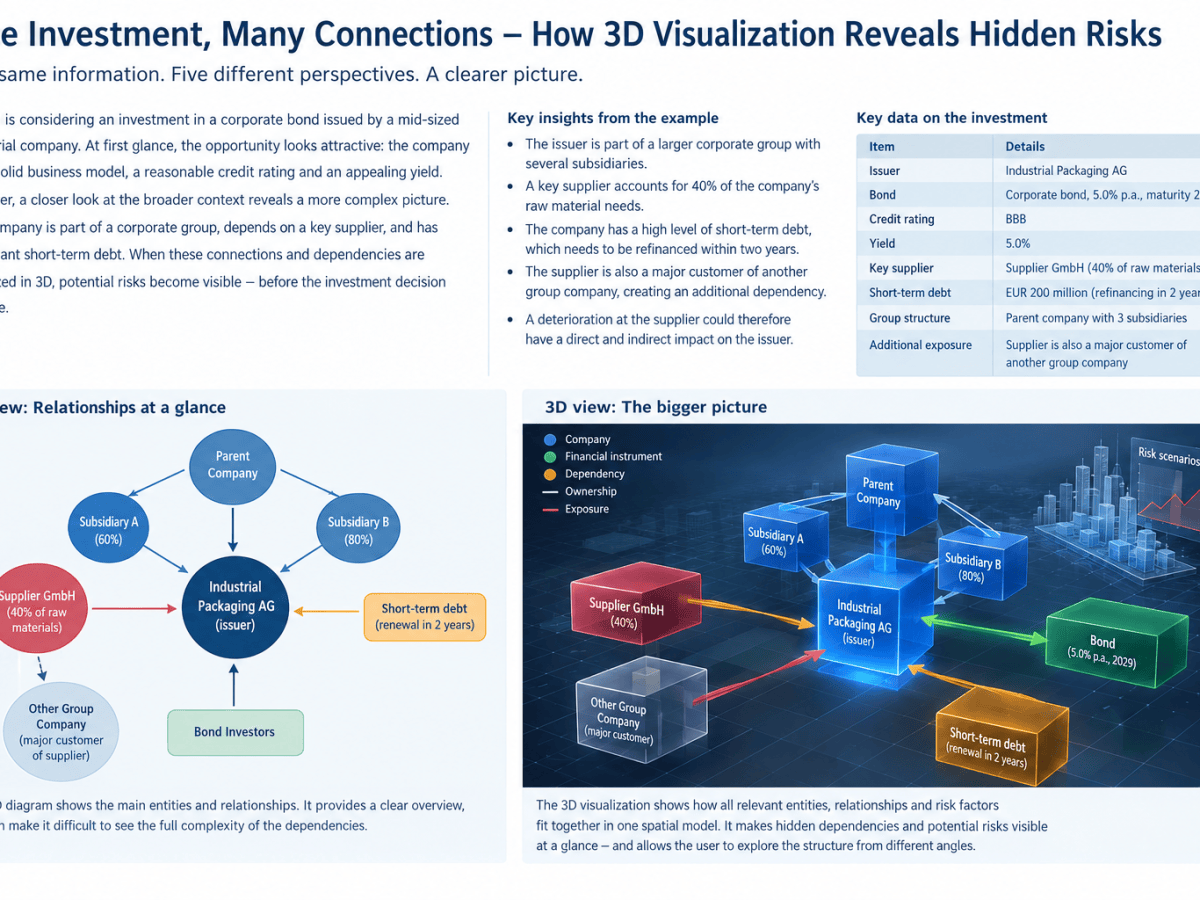
The idea is particularly relevant when dealing with complex corporate structures. Companies, subsidiaries, investments, ownership relationships, assets, and other business entities can be represented as connected elements within a virtual environment. What might appear as a complicated network in a traditional diagram can become a visual landscape in which relationships can be explored from different perspectives.
This approach changes the way people interact with information. Rather than simply looking at a predefined chart, users can navigate through the data, focus on individual elements, and explore connections between them. The objective is not to make data more spectacular, but to make complex structures easier to understand and discuss.
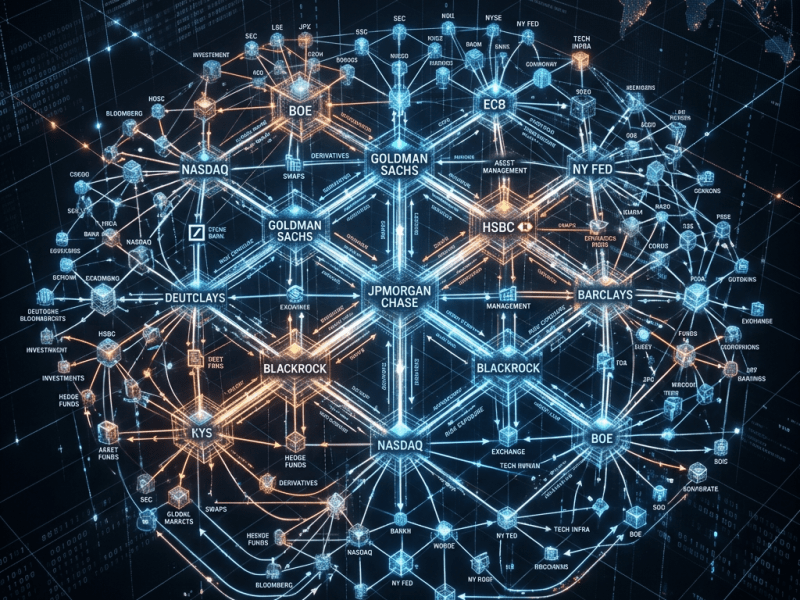
Financial services are a natural field of application. Investment structures and financial products can involve numerous variables and relationships that are difficult to communicate through traditional presentations alone. By combining different types of information within an interactive environment, Data2Space provides another way to explain how products, investments, companies, and financial relationships are connected.
The technology can also change the way financial information is presented to clients, investors, and business partners. A traditional presentation follows a predefined sequence of slides. An immersive data environment can instead allow participants to explore different aspects of a topic according to their questions and interests. A presentation therefore becomes less of a one-way communication and more of an interactive conversation.
Another potential advantage is collaborative analysis. Complex data can be explored together rather than individually. Teams can use a shared visual environment to discuss structures, identify relationships, and develop a common understanding of the information. This can be particularly valuable in situations where different areas of expertise need to be brought together.
At the same time, the value of immersive data visualization should not be measured by the use of 3D technology alone. A visually impressive environment is not automatically a useful analytical tool. The real question is whether the spatial representation helps users recognize relationships, understand complex information more quickly, or make better decisions.
This makes Data2Space interesting at the intersection of data visualization, finance, software, and extended reality. Its approach suggests that the next generation of data interfaces may not simply display information on increasingly sophisticated dashboards. Instead, data itself could become an environment that people can explore.
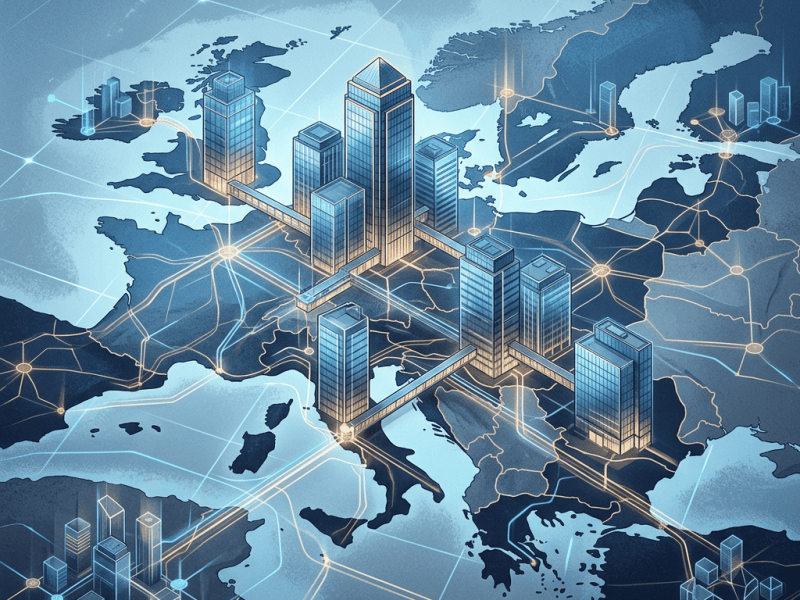
The concept is especially promising for highly interconnected information. Corporate groups with numerous subsidiaries, investment portfolios, ownership structures, and complex business networks can contain thousands of individual relationships. Representing these structures spatially could provide a new perspective that complements conventional business intelligence tools.
There are, however, important challenges. Professional users need intuitive navigation, reliable data, clear information structures, and a demonstrable business benefit. In financial applications, data quality, accuracy, security, and transparency are particularly important. Immersive technology therefore has to work as part of a robust data ecosystem rather than simply serve as a visual layer.
Data2Space represents a broader shift in how organizations can think about data. Instead of treating information as something that is merely displayed, it can be transformed into an interactive environment in which users can move, investigate relationships, and communicate insights.
As businesses continue to generate more complex and interconnected data, new ways of understanding that information will become increasingly important. Data2Space offers one possible vision of this future: data is no longer just something we look at — it becomes a space we can explore.














Leave a Reply