

Financial products are traditionally difficult to visualize. A prospectus can contain hundreds of pages, an investment presentation dozens of slides, and a website countless charts, figures and explanatory texts. Yet even extensive documentation does not necessarily make a complex investment opportunity intuitive.
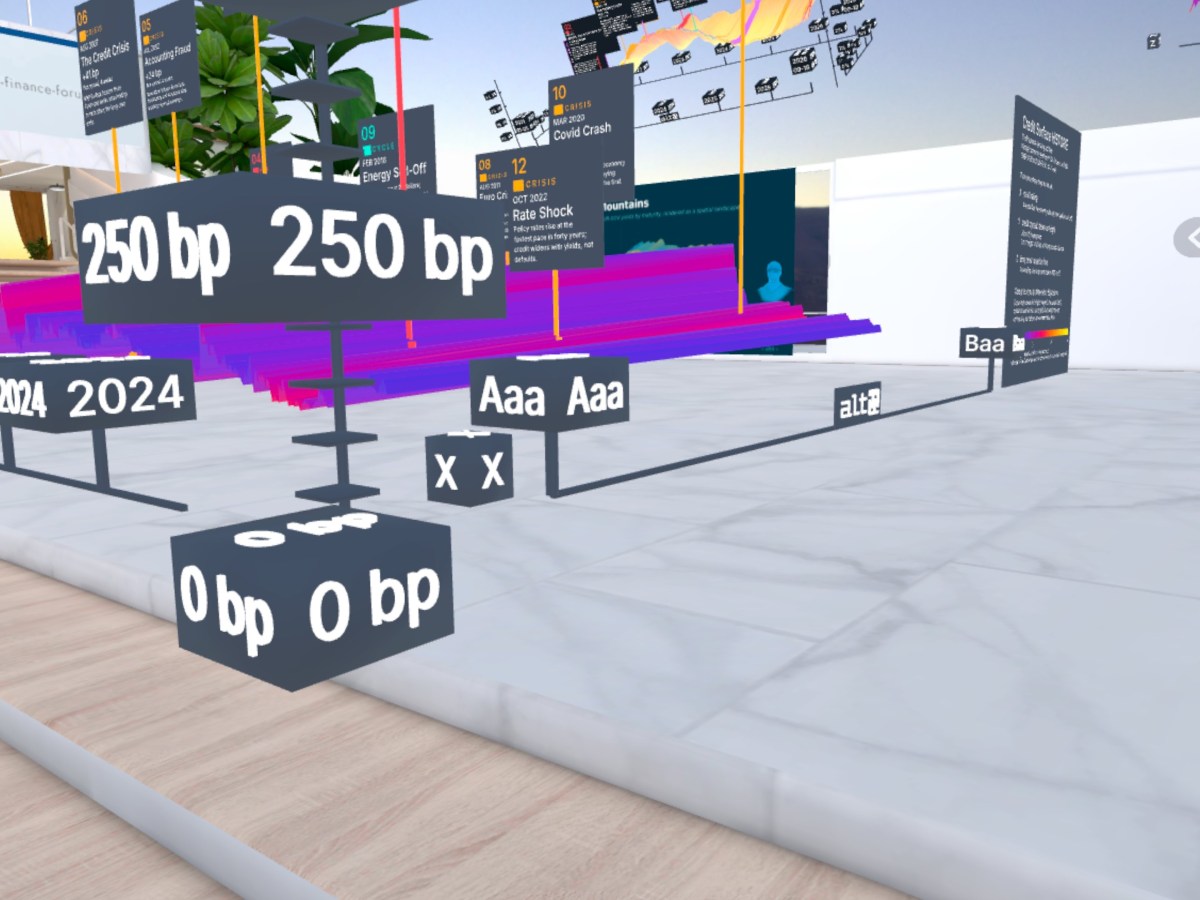
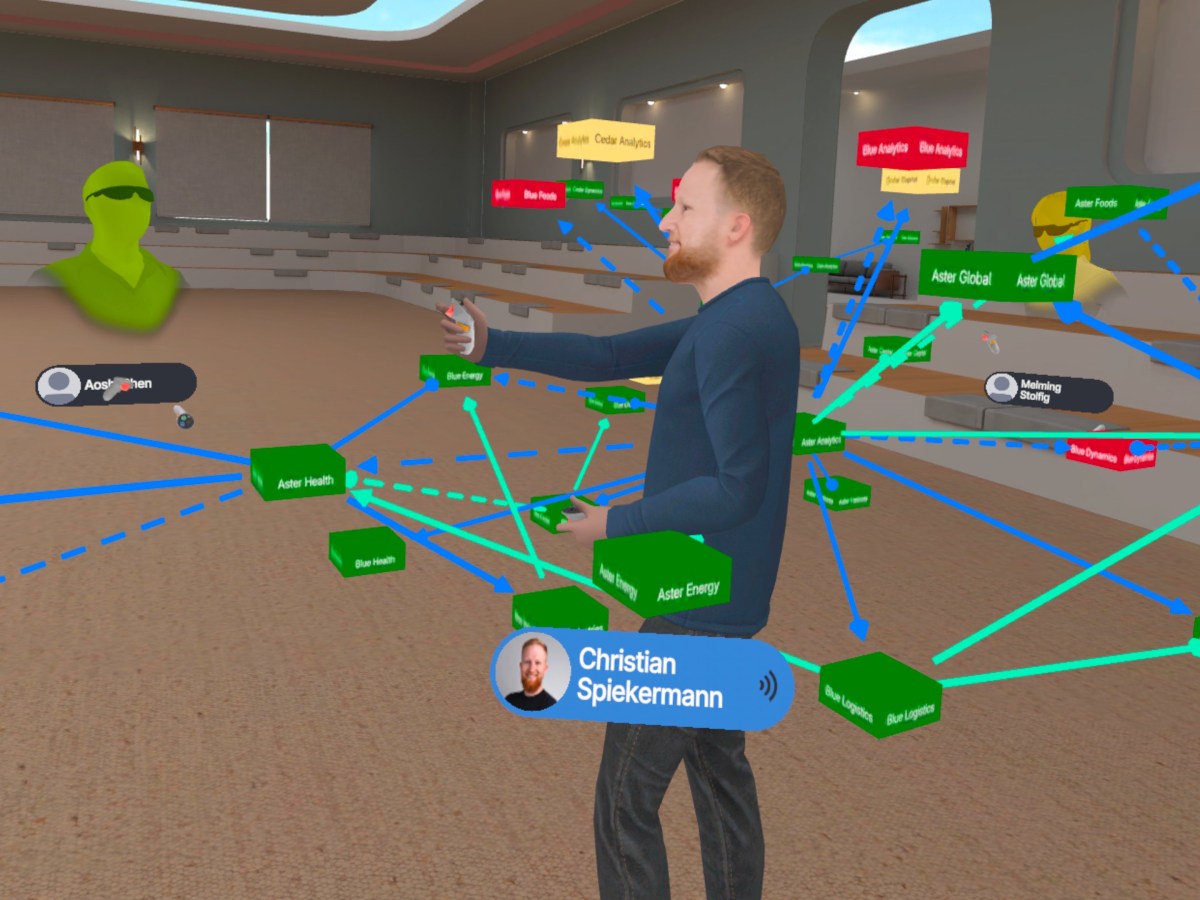
Data2Space takes a fundamentally different approach. Instead of simply describing a financial product, it creates an interactive environment in which the product itself can be explored. Data2Space transforms financial product information into immersive spatial experiences, creating a new interface between financial products and their potential customers.
From Product Description to Product Experience
The traditional communication of financial products is largely passive. A customer receives a brochure, reads a presentation, watches a video or navigates through a website. Information is provided, but the customer remains primarily an observer.
Data2Space changes this relationship. A financial product can become an interactive space in which users actively investigate information.
This is particularly relevant for products whose characteristics cannot easily be reduced to a single number. A real-estate investment, for example, may involve a location, buildings, tenants, financing structures, expected cash flows, development scenarios, risks and long-term objectives. Presenting all these elements in isolation can make the overall investment difficult to understand.
A spatial environment can bring these elements together.
Making Abstract Finance Tangible
One of the central challenges of financial communication is that many financial concepts are abstract. An investment opportunity has no physical form. Risk, return, cash flow, ownership and financing structures are represented through numbers and documents.
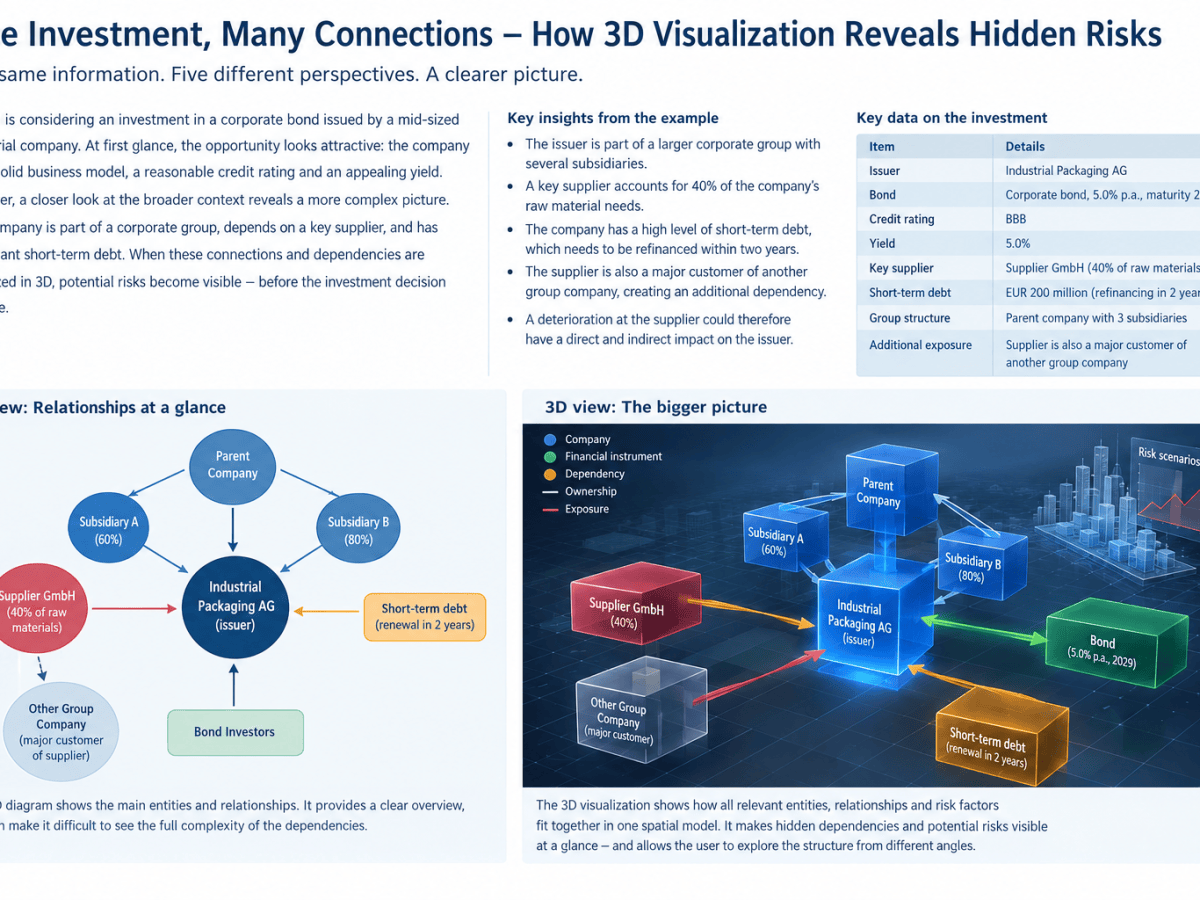
Three-dimensional visualization can provide a different form of representation.
A real-estate investment could be presented through a digital environment in which the property itself becomes the starting point. Users could explore the building, its location, relevant assets and associated financial information. Additional layers can reveal economic relationships, investment characteristics or scenarios.
The objective is not simply to create a digital replica of a physical asset. The digital environment can combine physical, financial and contextual information in a single experience.
From Brochure to Interactive Journey
Data2Space introduces another important change: product communication can be structured as a journey.
Instead of showing every available piece of information simultaneously, the experience can guide users from a high-level overview toward increasingly detailed information.
A prospective investor might first encounter the overall investment opportunity, then explore the underlying asset, examine its location, investigate financial characteristics and finally analyze specific details.
This creates a progressive disclosure of information. Complexity is not eliminated; it is organized.
The user decides where to go next and which aspects deserve closer attention. This can make complex products more accessible without reducing the underlying information.
Immersive Storytelling for Finance
Data2Space combines spatial visualization with narrative elements. This creates the possibility of immersive storytelling in which data, visual objects, financial information and explanatory content reinforce one another.
A conventional presentation might show a photograph of a property on one slide and financial projections on another. An interactive spatial experience could connect the two.
The physical characteristics of an asset can become part of the financial story. Its location, surrounding environment, development potential and economic data can be presented as interconnected components of one experience.
This is particularly interesting for investment products where context matters.
Real Estate as a Natural Use Case
Real estate provides an obvious example of the potential of this approach.
A property can already be represented in three dimensions. But a financial product based on that property contains much more information than its physical appearance.
A Data2Space environment could potentially combine the property with its location, relevant market information, ownership structures, financial projections, transaction information and other data.
The result is not simply a 3D model of a building. It is a spatial model of an investment opportunity.
This distinction could become important for real-estate funds, project developers, asset managers and other companies whose products combine physical assets with complex financial structures.
The Customer Becomes an Explorer
Perhaps the most important change is the role of the customer.
In traditional financial marketing, the customer consumes information. In an interactive spatial environment, the customer becomes an explorer.
Different users may take different paths through the same product. One investor may focus on location and physical characteristics, another on financial information, and another on long-term development potential.
The experience can therefore adapt to individual interests without requiring a completely different presentation for every customer.
This is particularly valuable when communicating with audiences who are not specialists in finance. Instead of requiring customers to understand technical terminology before they can understand the investment, the experience can provide context visually and interactively.
From XR Hardware to the Web
An important aspect of the Data2Space approach is that immersive product visualization does not have to be restricted to virtual-reality headsets.
The experiences can also be embedded into websites and accessed through a conventional browser.
This has significant implications for customer acquisition. A potential investor does not necessarily need to own an XR device or download a specialized application. The spatial experience can become part of the company’s existing digital customer journey.
XR therefore becomes less of a separate technology category and more of an additional interface for digital product communication.
A New Marketing Instrument for Financial Institutions
For banks, asset managers, insurers, real-estate companies, investment companies and other providers of financial products, this creates a new communication channel.
The traditional marketing question is often: How can we explain this product?
The spatial approach introduces a different question: How can we allow customers to experience this product?
This distinction may prove important in markets where products are increasingly difficult to differentiate through conventional communication. An interactive product environment can create a more distinctive customer experience while simultaneously providing access to detailed information.
Connecting Emotion and Evidence
Financial decisions require evidence, but they are also influenced by perception and understanding.
A prospectus provides evidence. A financial model provides calculations. A website provides information. But none of these formats necessarily creates an intuitive understanding of the investment as a whole.
Spatial product visualization can potentially connect analytical information with a more experiential form of communication.
The customer can see the asset, explore its context, access the relevant numbers and follow the narrative—all within one environment.
This does not replace financial analysis or due diligence. Rather, it creates another layer between the underlying evidence and the customer’s understanding of the opportunity.
From Financial Product to Digital Twin
The longer-term potential goes beyond marketing.
If a financial product can be represented as an interactive digital environment, that environment could potentially evolve with the product itself.
A digital representation of an investment could incorporate changing data, new scenarios, updated financial information or developments affecting the underlying asset.
The visualization therefore has the potential to become more than a promotional presentation. It can become a digital interface to the investment.
A Different Way to Communicate Value
The fundamental proposition behind Data2Space’s Product Visualizations is therefore simple but consequential: do not merely tell customers what a financial product is—give them an environment in which they can explore it.
This changes financial product communication from a document-centered model to an experience-centered model.
For customers, the benefit is potentially greater accessibility and a clearer understanding of complex investment structures. For providers, it creates a new channel for communication, differentiation and engagement.
The broader significance lies in the convergence of finance, spatial computing and digital customer experience. Data2Space is exploring what happens when a financial product is no longer presented merely as a document, a chart or a website, but as an interactive space.
In that model, the product is not simply explained.
It can be explored.















Leave a Reply